Warning: Undefined array key "post_type_share_twitter_account" in /var/www/vhosts/casinonewsblogger.com/public_html/wp-content/themes/cryptocurrency/vslmd/share/share.php on line 24
Posted on: January 15, 2026, 11:55h.
Last updated on: January 15, 2026, 11:55h.

- 20 charged today in federal indictment over college basketball point-shaving scheme
- Many of the 20 charged today are college basketball players
- NCAA says they’ve been investigating 40 student athletes from 20 schools over the past year
The risks of prop betting in sports are in the spotlight again, with the news this morning that 20 men have been charged in a point-shaving scheme involving NCAA Division 1 basketball teams.
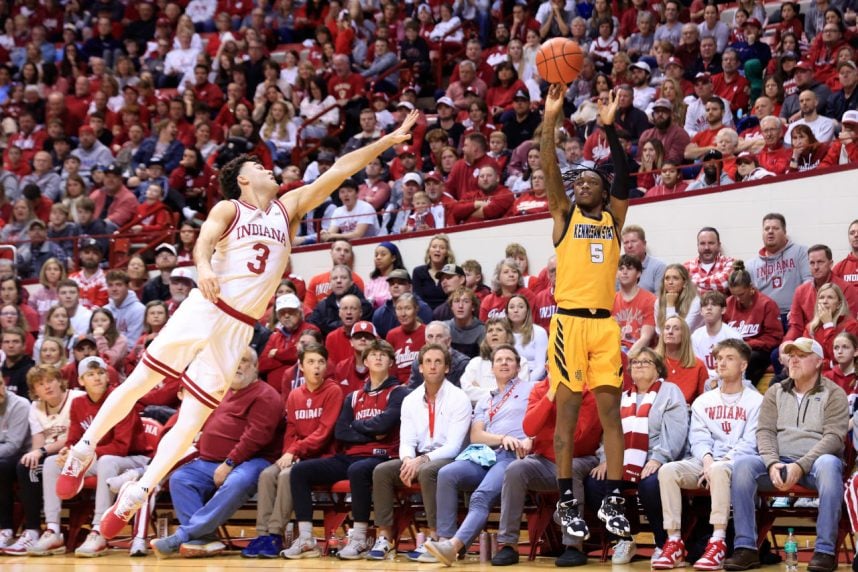
The breaking news about the scheme, detailed here, involves 39 college basketball players on 17 NCAA Division 1 teams, with 29 games that were fixed. That’s according to a federal indictment released this morning in the Eastern District of Pennsylvania.
20 People Charged
Fifteen of the defendants played in college basketball games during the 2023-24 and 2024-25 seasons. We wrote on two of them, Dae Dae Hunter and Dyquavian Short, sanctioned by the NCAA in November for fixing University of New Orleans games. ESPN reported that four of the players charged, Simeon Cottle of Kennesaw State, Carlos Hart of Eastern Michigan, Camian Shell of Delaware State and Oumar Koureissi of Texas Southern, played for their current college teams in the past week.
Point shaving is when a player intentionally underperforms to keep a game’s score below or within a specific point spread to benefit a bet. The charges in the indictment today filed in a Philadelphia federal court include bribery, wire fraud and conspiracy. Penalties range from a maximum sentence of five years for the bribery charges and a maximum of 20 years for the fraud charges. None of the allegations involve games played this season.
In a statement this morning, NCAA President Charlie Baker, again raised alarms about prop betting around the sport, calling out the risks in terms of match manipulation and other integrity issues inherent in promoting it. The NCAA has been asking state gambling commissions to eliminate gambling on individual prop bets and other high-risk prop bets such as first-half unders.
Students Banned After NCAA Investigation
The pattern of college basketball game integrity conduct revealed by law enforcement today is not entirely new information to the NCAA,” he said. “Through helpful collaboration and with industry regulators, we have finished or have open investigations into almost all of the teams in today’s indictment.”
Baker said in the statement the NCAA’s enforcement staff opened sports betting integrity investigations into 40 student athletes from 20 schools over the past year. The investigations are ongoing, with 11 student-athletes from seven schools recently found to have bet on their own performances, shared information with known bettors and engaged in game manipulation to collect bets they or others placed. All of them lost their NCAA eligibility permanently.
Additionally, 13 student-athletes from eight schools were found to have failed to cooperate in the NCAA investigation by providing false or misleading information, failing to provide relevant documentation, or refusing to be interviewed by enforcement staff. None of them are competing today either.
NCAA Wants Collegiate Prop Betting Eliminated
“The Association has and will continue to aggressively pursue sports betting violations in college athletics using a layered integrity monitoring program that covers over 22,000 contests,” said Baker, “but we still need the remaining states, regulators and gaming companies to eliminate threats to integrity – such as collegiate prop bets – to better protect athletes and leagues from integrity risks and predatory bettors.
We also will continue to cooperate fully with law enforcement. We urge all student-athletes to make well-informed choices to avoid jeopardizing the game and their eligibility.”
The other five men charged today were described as fixers. The indictment detailed how college players were approached with offers from $10,000 to $30,000 to fix basketball games for betting purposes