Warning: Undefined array key "post_type_share_twitter_account" in /var/www/vhosts/casinonewsblogger.com/public_html/wp-content/themes/cryptocurrency/vslmd/share/share.php on line 24
Images courtesy of PokerStars (Danny Maxwell)
Back in 2014, the Swedish poker professional Martin Jacobson won the World Series of Poker Main Event. Taking home $10 million, Jacobson’s win came after he battled back from being a short stack to become the champion of the world.
In the latest in our series of features on the players who have won the coveted WSOP Main Event bracelet, we found out how one of the most prepared winners in poker history made all his hard work pay off in spectacular style.
The Pre-Solver Era
If, as the saying goes, a week is a long time in politics, 12 years is an eternity in poker. In 2014, players still broke when the final table was reached. Going home to prepare for the finale, the ‘November Nine’ would then return in November to play down to a winner. A dozen years ago, the final nine didn’t reconvene until November 10, giving each of the players almost four months to work on their game.
One man worked harder than any other – the world champion, Martin Jacobson. I’ve always been fascinated by the former chef’s attitude to the period between July and November. Working on simulations, playing out different scenarios, and getting players to replicate the others at the table was no easy task in the poker era before solvers.
Times were a little bit different back then, Martin laughs. This was just before the solver era. As soon as I made the final table, I knew straight away that I was going to give it my all. I was really going to utilize the break to my full advantage, to put myself in the best possible position to take down the tournament and become the world champion.
Reaching the WSOP Main Event final table is something a poker player might hope to do once in their career – or twice if you’re Joe Cada. Martin was desperate to put the most work in that he could and capitalize on the opportunity. Shortly after making the final nine, the first thing Martin thought of was to ask his friends and peers for advice.
Rather than asking everyone individually, I set up a Skype group There ended up being 30 players, some people I knew really well and some that I didn’t. I realized quite quickly that the best way to prepare, other than brainstorming, was to ask people individually. I saved notes of key tips and strategies of how [each player] would approach it.
Martin asked every player one simple question: If you were in my spot, what would you do to prepare? It led to a variety of insights and prodded Martin in the direction of a major innovation. He thought about setting up a home game on PokerStars, which had just launched that facility on their site.
You could create your own game and pick your own structure. I figured it would be the perfect software to play out the final, [with] the blinds, the stack sizes, and everything.
It was a bit tricky to simulate it because you couldn’t start the tournament and say ‘Player 2 is going to start with 1.3m chips,’ but I had a friend who was a Team Online Pro, and he spoke to Stars in order to customize what we were able to do. Everyone had to start with equal stacks, so we started every game by chip-dumping to make it realistic, and I’d get my starting stack.”
Putting in the Work
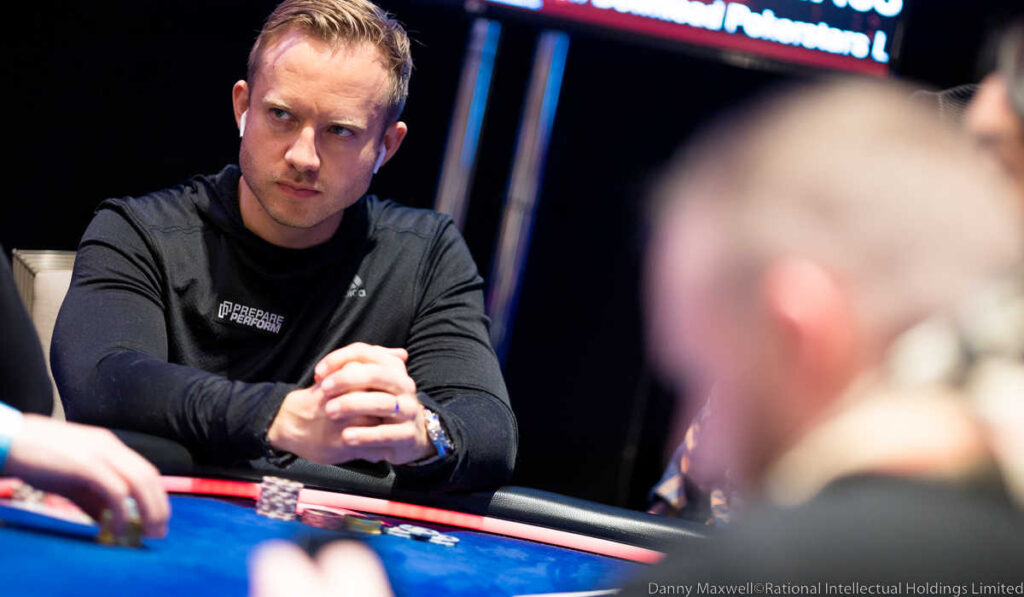
With the virtual pieces in place for the simulation, Martin then took the time to write long profiles on each of the eight men he would face in the Autumn. He went onto PokerNews and researched poker hands they’d played in other tournaments, dragging in every piece of information he could find, every hand they’d played, and every previous result, constructing a detailed analysis of each player.
I set a scale of how much I thought each player would ladder or go for the win, where they’d be in ICM terms, who they’d try to pick on or avoid. We needed nine players to start each simulation. There were 30 guys in the Skype group, but it was tricky to get everyone to commit to play a Sit N Go on a random Tuesday when we were all in different time zones.
Eventually, grinders, friends, and peers united at the digital felt at several nine-man final tables – between 40 and 50 is Martin’s best estimate. The Swedish pro took on many different roles, playing out situations where he became chip leader early or dropped short, rehearsing shove/fold scenarios, and openly discussing player ranges during gameplay.
It was very useful, as was hearing great players speak about how they thought each specific player would approach each spot. They knew what a big spot this was for me, says Martin.
A lot of guys had swapped action with me [in the Main Event], so had some incentive, but a lot of guys didn’t, and they were happy to contribute anyway. It’s something I remember. It definitely contributed to my confidence; I felt like I’d been in a lot of the spots I was put in.
Reality Bites
November arrived, and with it the biggest poker game of Martin’s life. The difference between what Mark Newhouse ended up winning in ninth place ($730,725) and the top prize of $10,000,000 was vast and almost incalculable in real terms to the players. When the action began, things didn’t go Martin’s way at all.
I’m not sure we played out [a simulation] where I didn’t play a hand for two hours, was down to seven big blinds and nine out of nine, but that’s what ended up happening! he smiles. Things suddenly turned, and I started chipping up. All that preparation helped me stay calm and believe things would go my way, and I never lost focus or confidence.
I’ve played a lot of tournaments since, and when you start losing chips, you can have negative thoughts. But I didn’t have any of that in 2014. I don’t know if that was because of the magnitude of the tournament or my preparation, but I was very positive throughout.
Martin managed to master his emotions in the biggest tournament spot of his career. He now puts a lot of that down to feeling like he was part of a team.
Having this team of friends and players behind me, knowing that they were backing me with the preparation throughout the whole final table was a real confidence boost. I was the player, but I wasn’t on my own. I was responsible for the execution part, but it felt like a team effort and much more powerful.
Playing for the Win
The pay jumps at the 2014 Main Event final table were steep, and Martin believes they played a big role in some players’ strategies.
It’s really top-heavy, but you’re also playing for an insane amount of money at this stage considering the buy-in. Playing for a thousand buy-ins up top, each pay jump is worth 15 or 20 buy-ins, and it creates an interesting dynamic. It makes more sense to go for the win when the majority of the money is up top, and the pay jumps are between first and second.
Standard practice dictates that players should go for the win, but the risk element is huge when every decision you make could cost you millions of dollars and life-changing money. Everyone wanted to go for the win, but it isn’t easy when external factors come into play.
I was so focused on the win that I rarely considered the pay-jumps. I was so focused on winning and playing my best. If I got ninth or sixth, so be it. If I were playing it today, I would be a bit more ICM aware. It depends on the other players – if one or two guys are playing way too tight or loose, then you have to adjust your game to give yourself the biggest edge.
The Poker Entrepreneur
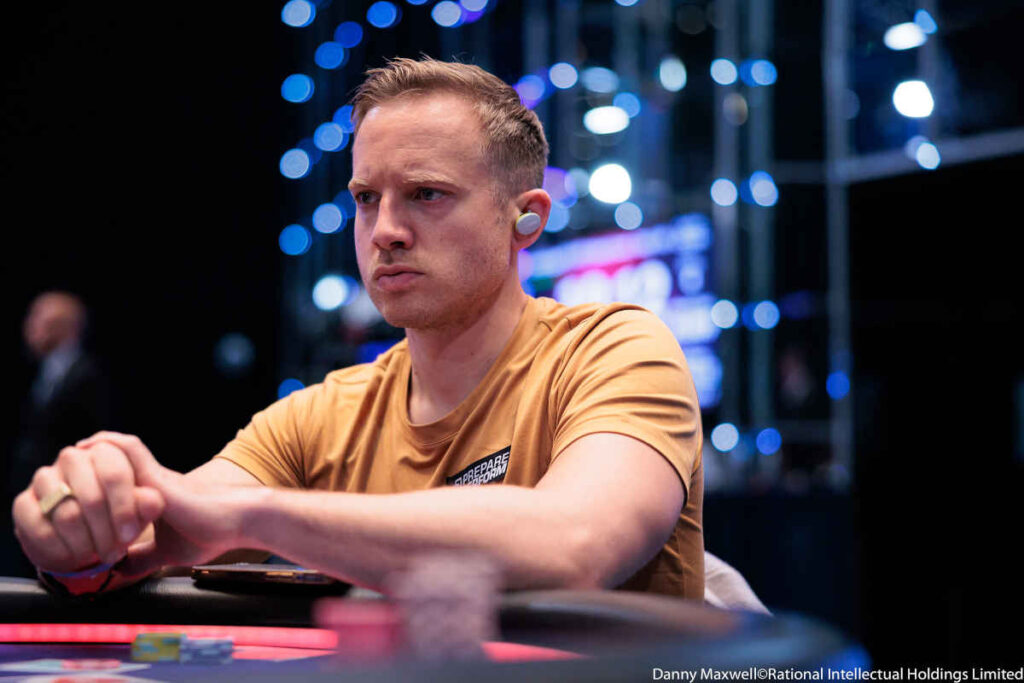
Over the course of Martin Jacobson’s life so far, the Swede has performed in several different job roles. Starting out life as a chef in his native Sweden, he then moved to London when based as a poker pro before now turning to business, acting as an investor and entrepreneur.
His process of learning a new discipline, correcting any errors, adjusting his methods, then repeating that pattern, is a simple one to outline but hard for many to execute. I wanted to know what enabled Martin to follow that routine over his adult life.
I don’t know if it’s a personality trait, but everyone’s brain works differently. I’m more inclined to think in those patterns, and I have a very systematic, process-driven approach.
Poker primes you in a way, teaching you the principles of learning and reiterating, trying new things, and getting constant feedback. You try new strategies, find out what works, and learn along the way, getting better at what you’re doing.
Exploring new careers and different business avenues, Martin is convinced that his process translates to a number of different industries.
What I’ve learned in poker I can implement in business and even in sports. I’m trying to get better at golf and learning jujitsu; it’s a lot of the same – pattern recognition. That’s huge in poker and big in learning new skills and life in general.
The World Champion in China
Back in 2015, the year after Martin won the $10m top prize, he was deep in the role of poker’s latest ambassador. Receiving an invite from the WSOP asking if he would be interested in going to China to be part of Tencent’s poker gameshow on television, Martin traveled out to the Far East to be a special guest on the show.
They wanted the latest world champion, and I didn’t get much of a briefing on it, but I thought it would be a great opportunity. I’d never been to China before, so I went, and it was probably the most unique poker experience I’ve had. I got out at the airport, and there were 50 fans screaming, holding up pocket tens and Martin Jacobson signs and shirts they wanted me to autograph!
Martin had never experienced anything like it before and soon discovered that it was a different world from what he was used to in terms of the show’s production.
They were so enthusiastic and passionate, there was no such thing as cringe!, he laughs. They asked me to look at the camera and tell everyone I used to be a chef. I’d then do this ‘knife’ motion with my hands while sitting in an armchair on a stage. It would make a Triton set-up look like a budget.
That wasn’t all. Martin got to travel around China as poker’s newest global celebrity, and he now looks back on the unique experience as a memorable one.
To meet everyone, up-and-coming players, and then more established pros was great. We went to different cities, and millions watched it live on TV. It was pretty difficult to find it afterward, and it was all in Chinese, but it was very cool and a unique opportunity I was glad to be a part of.
Parenthood and Puzzles
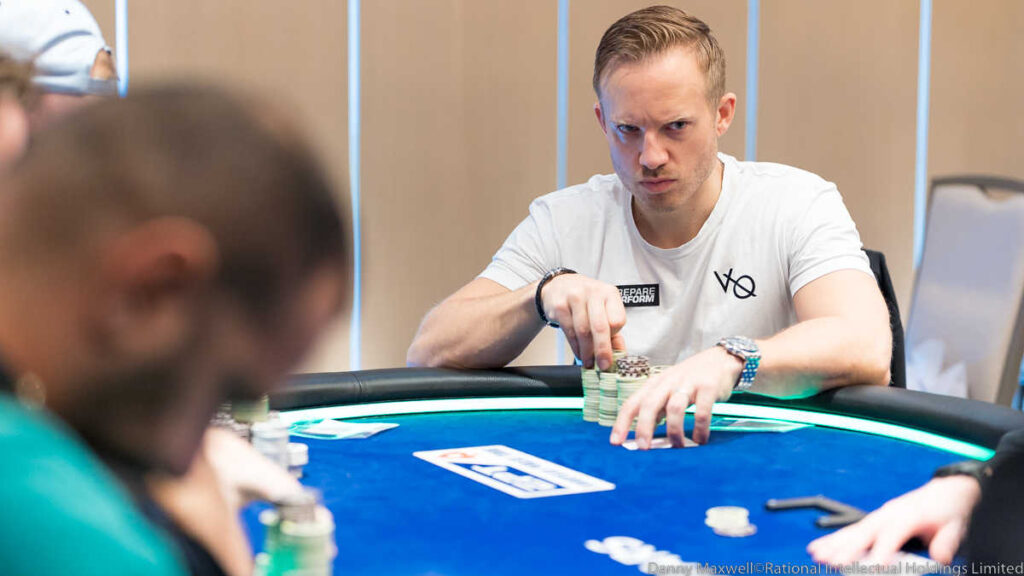
Martin is a father now and has seen his life change in many wonderful ways as a result. It’s also meant he has changed his poker routines as a result.
It makes it tougher to be away for long stretches, Martin admits. We recently moved, so I have to be selective about which events I go to. Every time I leave, being away is tough; children change so quickly, so it’s really hard. You don’t want to miss anything, but also playing online is really tough because sleep is suffering, and that has been the biggest challenge, for me at least!
Just like poker, parenthood has, in Martin’s words, “taught me to be adaptable” and to be more efficient with his time.
Once you become a parent, you have to become a great optimizer if you want to get things done, both on a professional and personal level. You have to plan and more, which is something you take for granted before you have kids, because you have so much free time. Poker isn’t my life now as it once was when I was younger, but I still love it and want to compete.
Poker is a gigantic, lifelong puzzle, one that Martin still loves trying to solve. He looks back on the player he was when he won the World Championship and laughs at the way that man saw the same game.
When I won, I felt like there wasn’t much room to improve! Back then, you could watch videos, talk strategy with friends, and play the game, but there were no solvers. When they became widely available, you realize quite quickly that no one knows anything really. We’re so far away from what we thought was perfect poker.
That realization reignited Martin’s passion for the game, and it became a new puzzle to solve. He believes that poker itself needs to get back to where it was pre-Black Friday two decades ago, “where anyone can play poker from anywhere,” but Martin is still bullish about the prospects of the live poker scene.
We’ve seen big numbers at WSOP and on new tours, which are both doing a great job of growing the game. I’m not too sure where they are all coming from, but we’re seeing an increase in numbers each year since COVID. I still think the live scene has a lot of value.
Why Retirement Is Out of the Question
Winning the WSOP Main Event can feel like ‘completing’ poker to many players, such as the 2023 world champion Daniel Weinman, who told us why he walked away from poker after taking down the top prize of $12.1m. Yet Martin believes that it comes down to a straight choice of motivation, something he has thought about a lot in the years since.
It’s a tough one because it’s the pinnacle of the game that you’re never going to exceed and you’re very, very unlikely to win it twice, he admits. If you’ve already won it and you know how it feels, what are you doing it for? Ultimately, what’s your motivation to play the game? What was it before winning, and has it changed?
Asking himself those questions is not something Martin did right after winning. He tells me how “everything happened so fast,” and that he now wishes he’d taken some real time off to process the enormity of what had happened.
There’s no break. It’s media obligations, you get invited to a lot of stuff, and there’s the next tournament. I was back on the circuit right away. I took a fortnight, and that wasn’t nearly enough.
Martin had been a professional poker player for six years at the time of his victory, and studying so hard made it hard to stop playing.
I felt like I was on the top of my game, so it didn’t make sense to walk away right there, even though I’d achieved the biggest goal there is. A lot of players’ motivations are to win as much money as possible or to win the Main Event.
I never had those types of goals; they were sub-goals, but that wasn’t my big reason as to why I played the game. I think it’s very hard to have longevity in poker if those are all you think about.
The challenge of poker, as Martin sees it, is almost entirely mental. Problem-solving at the highest level, developing a process, then sticking to it, not only from an in-game standpoint but during setbacks, downswings, and emotions, which can be extremely tough.
They make you feel alive in a sense. That’s a deep personality trait where some people really enjoy that, it’s hard to walk away from, similarly to other sports. There’s never talk of a tennis player retiring after winning Wimbledon or a golfer winning the Masters and then quitting. It’s never up for discussion. Why is it a thing in poker that you could win the Main Event and just retire?
Martin finds the notion “a bit strange” but concedes that every player’s motivation is different.
Once you’ve been there and done that, you really have to redefine your goals and motivation. What is it that drives you now? To win the Main Event or to compete and be challenged? If it’s the latter, nothing has really changed. You can still feel all these things and be challenged at the highest level.
After 12 years, Martin Jacobson has changed in many ways, becoming a father, a businessman, and a more mature version of the man who won $10 million back in 2014. But in other ways, the Swedish phenom who worked harder than anyone during the summer break between reaching the World Championship final table and conquering it, is exactly the same man.