Warning: Undefined array key "post_type_share_twitter_account" in /var/www/vhosts/casinonewsblogger.com/public_html/wp-content/themes/cryptocurrency/vslmd/share/share.php on line 24
A new wave of mainstream reporting on prediction markets has emphasized that most casual users lose while a small group of sophisticated traders captures most of the profits.
That criticism directed at prediction markets by both The Wall Street Journal and The Independent is not entirely wrong. Retail traders do lose money in large numbers.
Some users absolutely overtrade. And as markets become more sophisticated, casual participants face increasingly difficult odds competing against professionals armed with data feeds, automation, and experience. I do think the framing obfuscates the reality that this is not unique to prediction markets.
In fact, it may be a sign that these markets are maturing rather than failing.
The Problem – Skilled Traders are More Efficient
Across nearly every competitive financial ecosystem, profits eventually concentrate among the most skilled participants. That is not evidence the system is run by a ‘house’ like a sportsbook. It is usually evidence that the top participants are becoming more efficient.
A widely cited Taiwan Stock Exchange study found less than 1% of day traders were able to consistently generate abnormal positive returns net of fees over time. Meanwhile, research into Brazilian futures traders found that 97% lost money, with only around 1% earning more than minimum wage from trading activity.
And yet nobody seriously argues that stock markets of these developed nations themselves are scams because elite traders outperform retail participants. Unfortunately, as markets evolve, easy edges disappear. Early participants may profit simply because information is fragmented and competition is weak but that does not ensure future success.
Over time, professionals enter, liquidity improves, pricing becomes more efficient, and profits consolidate among the best traders. That pattern is not isolated to markets, it exists everywhere competition is present.
Example in the Context of Professional Sport
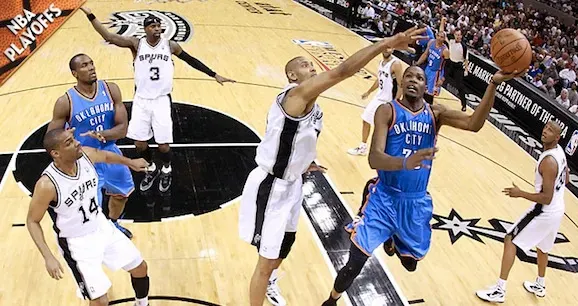
Professional sports offers a good example. According to NBA tracking statistics from the 2025–2026 season, stars like Nikola Jokić and Luka Dončić are directly involved through scoring or assists in roughly 40–52% of their teams’ offense. That does not mean basketball is “broken.”
It means elite talent compounds advantages at the highest levels of competition. Prediction markets are increasingly moving through a similar professionalization process.
I want to be clear, however, that doesn’t mean the criticism around gambling harms should be dismissed.
Gambling addiction is a serious issue, and prediction market platforms should be held to high standards around consumer protection. Regulators and operators should aggressively monitor compulsive behavior, improve disclosure requirements, and intervene when necessary to restrict or ban problem gamblers.
The fact that these markets can be intellectually interesting or economically useful does not eliminate the responsibility to protect vulnerable users.
Markets based on whether a celebrity says a certain word during an interview may drive engagement, but they are probably not the clearest representation of the technology’s long-term value.
Is Hedging the Future of Prediction Trading?

Historically, many of the world’s most important financial markets evolved not simply for speculation, but for hedging. Farmers hedge crop prices. Airlines hedge fuel costs. Manufacturers hedge currency exposure. Insurance markets exist because people want to transfer risk.
Prediction markets could eventually evolve in a similar direction if they mature correctly. Imagine a frozen yogurt shop owner worried about an unusually cold summer reducing foot traffic. On the other side of the trade could be a soup shop owner worried about an unusually warm winter hurting demand. A localized weather market could allow both businesses to hedge downside risk tied to temperature outcomes.
Neither participant necessarily needs to “beat” the market in the traditional sense. The market’s value comes from distributing risk more efficiently.
Is it More Difficult to ‘Beat’ Prediction Markets?
Ultimately, if we compare the current situation to how it was in the early days of prediction market trading, it has become more difficult to ‘beat’ them and earn a profit for several reasons:
- The most-skilled traders getting more efficient
- Obvious edges becoming harder to find
- Pros using more capable data tools and automation
- Overall, prediction markets are ‘maturing’
That future may still be years away, and not every market currently listed on prediction platforms will contribute meaningfully toward it. But dismissing the entire industry because sophisticated traders outperform recreational ones misunderstands how most competitive markets evolve.
Retail traders should approach these markets cautiously and realistically. The days of easy money are likely fading as the ecosystem professionalizes. But concentrated profits alone are not proof that prediction markets lack value.
In many ways, they may simply indicate the space is beginning to mature into something far more economically significant than internet novelty bets.
The uncomfortable reality is that in almost every open competitive system, the very best participants eventually separate themselves dramatically from the average. That is true in finance, sports, entrepreneurship, academia, and technology. Prediction markets are unlikely to be any different.
Prediction markets involve risk and are not suitable for everyone. While many platforms offer tools to make informed trades, outcomes are never guaranteed, and users should never risk more than they can afford to lose. Always trade responsibly. Additionally, platform availability and legal status vary by region. It is your responsibility to check local laws and verify that you are legally allowed to use a given platform before participating.
Read our full affiliate & risk disclosure.