Warning: Undefined array key "post_type_share_twitter_account" in /var/www/vhosts/casinonewsblogger.com/public_html/wp-content/themes/cryptocurrency/vslmd/share/share.php on line 24

In the latest turn of events related to the massively popular predictive gambling market, New York Attorney General Letitia James announced that the State had filed lawsuits against Gemini and Coinbase.
Of course, state regulators having an issue with prediction markets is not at all new. New York is just the latest state to get involved following Nevada suing Coinbase back in February.
What Are Prediction Markets?

Before we proceed further, let’s go over what exactly prediction markets are and how they operate. These markets, hosted by the likes of Kalshi, Coinbase, Gemini, Polymarket, Crypto.com, and Robinhood, allow users to trade contracts tied to the occurrence or non-occurrence of events.
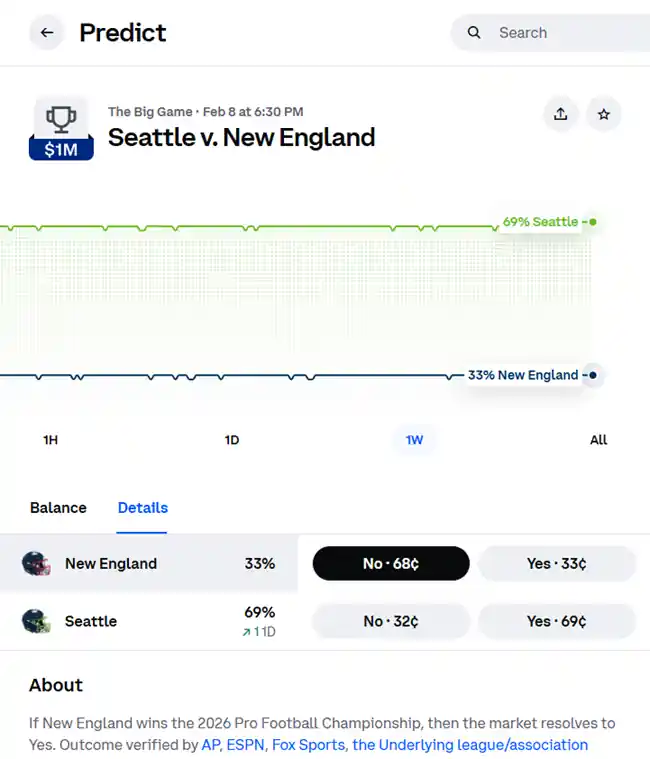 Contracts on The Big Game at Coinbase
As you can see in the image above, users are able to select outcomes of various world events (including sports) and trade contracts related to them. It has been estimated that the vast majority of action on prediction market sites is on sporting events.
This Really is NOT Gambling?

This, perhaps, is the real question at hand here. New York, along with other states like Nevada, has sued prediction markets, claiming that these services constitute illegal gambling in their jurisdictions.
On the other hand, the CFTC sued three states earlier this year for their actions against designated contract markets that are registered with the CFTC. The CFTC (Commodity Futures Trading Commission) argues that the Commodity Exchange Act gives it “clear and longstanding exclusive jurisdiction” over all of these markets.
Along with the question of whether or not this is gambling is the battle between federal and state legislators. New York and other states have made it clear that they believe these are unlicensed operations, while the CFTC says quite the opposite.
New York Thinks This Is Gambling
Letitia James is the New York Attorney General. Attorney General James had the following to say regarding the recent lawsuits:
Gambling by another name is still gambling, and it is not exempt from regulation under our state laws and Constitution. Gemini and Coinbase’s so-called prediction markets are just illegal gambling operations, exposing young people to addictive platforms that lack the necessary guardrails. My office is taking action to protect New Yorkers and stop these platforms from violating the law.
 New York Attorney General Letitia James
Clearly, New York believes this is gambling. New York contends that because these companies are not licensed to offer gambling in New York, they are operating illegally. New York is only the most recent jurisdiction to take a similar stance, following in Nevada and Washington, D.C.’s footsteps.
Nevada argued that the sports contracts and certain other contracts offered by Coinbase are a form of wagering activity under state law, and thus, Coinbase requires licensure by Nevada to legally offer such products. Moreover, because the firm accepts customers between the ages of 18 and 21, it violates the provisions of NV law that only permit those above the age of 21 to gamble.
This is almost the exact same complaint and wording as New York. New York also demands that customers under the age of 21 not be allowed to gamble.
The CFTC Fires Back at New York

On April 24, only a few days after the initial lawsuit was filed by A.G. James, the CFTC fired back by suing New York to assert prediction market oversight.
The main complaint is regarding a cease-and-desist letter sent to Kalshi back in October of last year. This, in conjunction with New York’s lawsuits recently filed against Coinbase and Gemini, comprises the basis of the CFTC’s complaint.
Despite claims by New York officials that state law allows them to prohibit certain designated contract markets from operating, the state’s effort to shut down federally regulated markets unlawfully intrudes on the comprehensive federal framework Congress established for national swaps markets, according to a complaint filed by the CFTC in the U.S. District Court for the Southern District of New York.
The CFTC and the DOJ had this to say in a joint statement:
Unless restrained and enjoined by the Court, defendants are likely to continue their attempts to subvert federal law and the exclusive jurisdiction to regulate event contract swaps conferred on the CFTC by Congress.
Named in the lawsuit as defendants are New York State, Governor Kathy Hochul, Attorney General Letitia James, the state gaming commission, and several other senior officials.
Other States Target Prediction Markets
The battle over prediction markets has been ramping up and gaining intensity lately. Nevada sued Coinbase and Polymarket earlier this year. In late November 2025, Tennessee’s Sports Wagering Council issued cease-and-desist letters to Kalshi, Polymarket, and Crypto.com stating that these platforms were illegally engaging in unlicensed sports wagering.
On Dec. 3, 2025, the Connecticut Department of Consumer Protection Gaming Division sent cease-and-desist orders to Kalshi, Robinhood, and Crypto.com claiming that their prediction markets were illegal. Other states, including Illinois, Maryland, Arizona, New Jersey, Montana, and Ohio had sent similar correspondence to prediction market companies already.
In Connecticut, Michigan, and Illinois, Coinbase fired the first shot by filing lawsuits against these states. Coinbase stated that it believed that enforcement actions from these states were imminent and would harm its planned business actions.
It is tough to say how things may play out at this point. There are now numerous litigants and states involved in legal battles that may go on for years. Nevada had a federal court side with it back in February in its case against Coinbase, but this only allowed Nevada to proceed with the lawsuit it filed against Coinbase at the state level. It by no means settled anything regarding the law in other states or indeed across state borders.
Offshore Gambling is an Option

Despite all of the talk of lawsuits and problems with prediction markets, safe online gambling is still widely available to players in the United States.
One of the best options is Lucky Rebel, which offers a broad range of sports betting and casino gambling choices. When you create a new account, you’ll benefit from a bonus worth up to $2,500 to bet on sports. You can also utilize this bonus to play casino games.
If you are interested in learning more about Lucky Rebel, please feel free to read through our detailed Lucky Rebel review.
Last Updated April 27, 2026 – by Allen Woods, Author