Warning: Undefined array key "post_type_share_twitter_account" in /var/www/vhosts/casinonewsblogger.com/public_html/wp-content/themes/cryptocurrency/vslmd/share/share.php on line 24
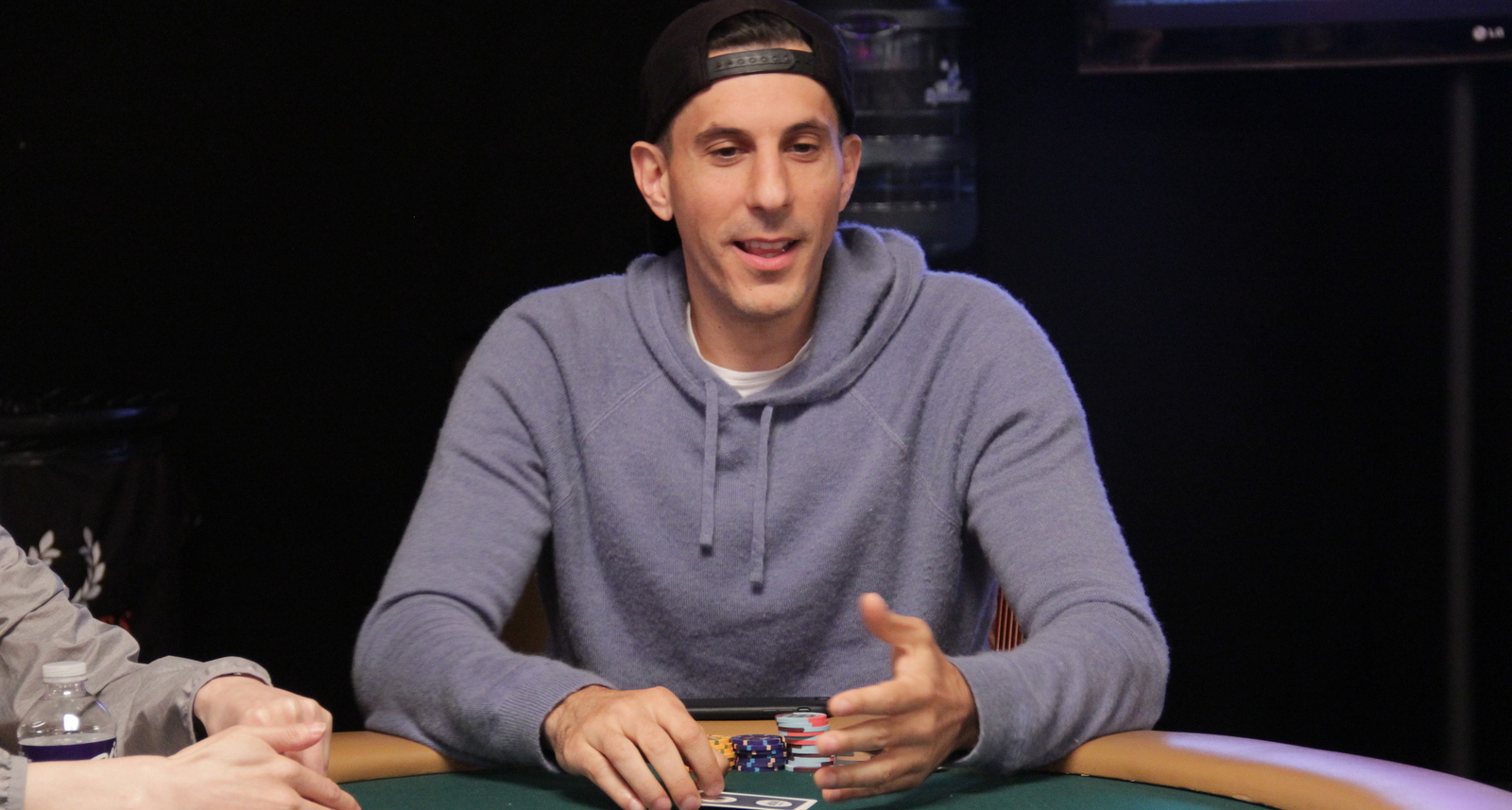
A social media spat broke out on Monday between DraftKings co-founder Matt Kalish and professional sports bettor and poker player Haralabos Voulgaris over a new Massachusetts regulation mandating sportsbooks inform sharp bettors why their action has been limited.
The online squabble peaked when Voulgaris called the former DraftKings president “retarded.”
The discussion began after one Massachusetts user shared a note from Fanatics. He was informed that his betting limits had been reduced over concerns about “potential arbitrage positions.”
In Massachusetts they now have to tell you if you’re limited and why. Got my first one today.
Such a weird way to say “you were profitable so we didn’t want your action” pic.twitter.com/XfvbhJsdjA
— John Hyslop (@sloprules) June 1, 2026
‘Advantage Gambling’
Kalish said limiting bettors’ action was part of attempting to remain a profitable business. He noted that removing or limiting some players who are winning or engaging in arbitrage – placing wagers on all possible outcomes – was necessary to remain financially viable.
“General framework in gambling industry is always ‘gambling games have by design a house edge’ so anything systematically removing it and detected, e.g. card counting in [blackjack] or arb or whatever = you’re going to get limited or banned in gambling industry,” Kalish posted.
Voulgaris countered that sports bettors aren’t cheating or engaging in anything other than using their own abilities to win.
“I don’t think you understand what ‘advantage gambling’ actually means,” he posted. “You can’t lump card counting, edge sorting, shuffle tracking, or exploiting correlated parlays together with someone betting straight sports wagers.
“We’re not talking about customers abusing broken same-game parlays or obvious book errors. We’re talking about people who bet normal sides and totals, win, and then get shown the door because the book is either too dumb or too greedy to figure out how to properly book high-limit VIPs while separating them from high-limit sharps.”
Okay I apologize. I didn’t realize you were retarded.
— Haralabos Voulgaris (@haralabob) June 2, 2026
Destined To Lose
During the dispute, Kalish defended the moves by arguing that sportsbooks must have a house edge. Sharp bettors remove that and can affect profitability, he said. Kalish’s argument for limiting is that gambling implies a house edge. But professional sports bettors remove that edge. Consequently, Kalish believes in limiting those gamblers.
“It’s not complicated, this is just a specific audience,” he wrote. “It’s in the gambling industry, 100% of gambling games have a house edge. Every gambling operator globally will ban/limit/trespass you if doing anything to systematically remove house edge – no different from card counting, edge sorting.”
Voulgaris responded that the operator actually sets the line and is already constructing a house edge in betting markets. He added that losing players fund the entire industry. In traditional sports betting operations, sportsbooks are the direct beneficiary of those losses. Whereas on a prediction market platform, the sharper counterparty wins the money.
“Are you saying sportsbooks intentionally set lines that systematically remove their own edge?” he asked. “Because if so, that sounds like a sportsbook problem. You’d be better off just embracing your actual role: a parasitic goblin whose job is to extract maximum value from customers, even if it destroys their lives, while simultaneously banning anyone with the slightest chance of showing a profit.”
Voulgaris later also pointed to some of DraftKings’ recent financial losses as a sign that weeding out winning bettors may be better for business.
An overlooked aspect of the @mattkalish vs Prediction Market debate:
Its Hard to really drag a guy too hard who’s just doing everything he can to protect his bags.
DraftKings has a cumulative net loss (accumulated deficit) of roughly $6.4 billion as of early 2026 pic.twitter.com/TsMI6duwaH
— Haralabos Voulgaris (@haralabob) June 3, 2026
“Can you imagine what their numbers would look like if they couldn’t ban anyone *quasi* competent and couldn’t juice growth by marketing gambling addiction as a lifestyle choice to the youth of America?” Voulgaris posted.
First Of Its Kind Regulation
The Massachusetts Gaming Commission approved the new regulation in December and went into effect on Monday. Now, the state forces operators to inform bettors why their activity is limited in any way.
Operators must tailor each notice to the individual bettor. Thus, sportsbooks can’t give the same reason to every customer. Regulators hailed the move as a way to better serve sports betting customers in the state.
“We are the first jurisdiction to take up this issue,” MGC Chairman Jordan Maynard said when the proposal was first considered. “This was not an easy topic to take on, but it’s a good thing for the citizens and patrons of the commonwealth.”
Voulgaris Touts Prediction Markets
Voulgaris spent much of his life wagering on the NBA and made millions from the industry. He also worked for three years as the director of quantitative research and development for the Dallas Mavericks.
At the poker table, the 50-year-old Canadian has $5.5 million in winnings and made regular appearances on High Stakes Poker. An early adopter of bitcoin, he parlayed some of those winnings into acquiring the Spanish soccer club CD Castellón in 2022.
Beyond his criticism of sportsbooks limiting action, Voulgaris pointed out that prediction markets are a fairer way of allowing everyone to bet on markets. These can be great options for limited bettors, Voulgaris said.
“I do appreciate you pointing out the hypocrisy of ‘prediction markets’ being anything other than gambling, but at the very least these prediction markets have come up with a platform that allows sharps to place a bet without getting banned,” he said.
Prediction markets operate as peer-to-peer platforms allowing users to trade shares on outcomes of different events. There is no sportsbook setting lines. There are only counterparties willing to take the other side of the contract. As a result, traders can sell their position before the outcome is determined.
By comparison, sportsbooks use a house-controlled model where bettors wager directly against the bookmaker. Bettors can’t trade their positions on the outcome of a game.