Warning: Undefined array key "post_type_share_twitter_account" in /var/www/vhosts/casinonewsblogger.com/public_html/wp-content/themes/cryptocurrency/vslmd/share/share.php on line 24
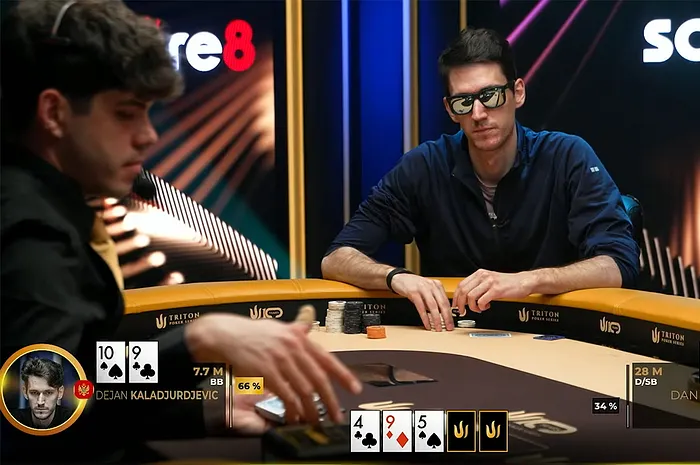
Pots contested heads-up can often result in massive coolers, and they don’t come much bigger than when they occur during the Triton Poker Super High Roller Series. In the recent $25,000 Golden Decade event in Montenegro, Daniel Dvoress and Dejan Kaladjurdjevic were heads-up for the title. First place came with $849,000, with the runner-up collecting $575,000.
The final hand was considered to be a huge cooler, with the chips of both players destined to go into the middle, or where they? Lukas Robinson uses the powerful GTO Wizard tool to analyze the play of both players. Were the lines both players took GTO Wizard-approved? Let’s take a look.
In the hand in question, Dvoress was in the small blind (SB)/ button (BTN) with 28.6 million chips (95 big blinds), while Kaladjurdjevic was in the big blind with 7.8 million chips (26 big blinds). The blinds were 150,000/300,000 with a 300,000 big blind ante. Here’s how the hand played out.
Pre-flop Action
Daniel Dvoress called with 3♥2♠. Dejan Kaladjurdjevic checked his 10♠9♣ in the BB.
Post-Flop
Flop (900,000 Pot): 9♦5♠4♣
Action: Kaladjurdjevic checked. Dvoress bet 900,000. Kaladjurdjevic called.
Turn (2,700,000 Pot): A♥
Action: Kaladjurdjevic checked. Dvoress bet 2,200,000. Kaladjurdjevic called.
River (7,100,000 Pot): 9♥
Action: Kaladjurdjevic donk-jammed for 4,600,000 total. Dvoress snapped, covering him.
Both players tabled their hands, and Dvoress revealed the straight to win the pot and the tournament.
In the end, it all came down to a cooler, but were both players’ decisions in the hand GTO-approved? Let’s use the GTO Wizard solver to find out.
Pre-flop Analysis
Daniel Dvoress called with 3♥2♠. GTO Approved ✔️
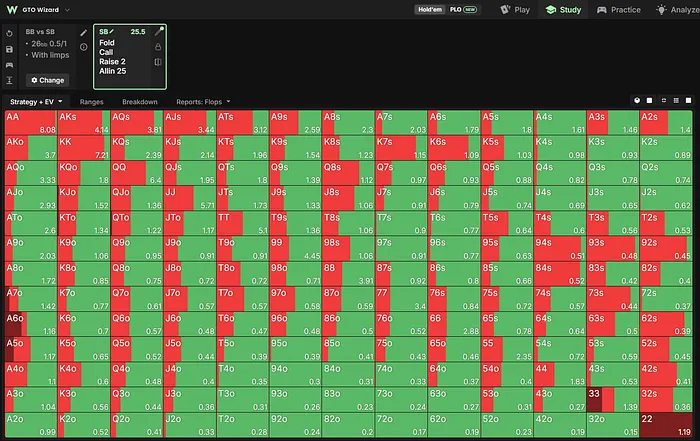
Due to the 1bb ante, there is no open folding from the SB here. To show how much the ante changes the strategy, let’s compare this to a heads-up SB range with only a 0.25bb ante, which is commonly used online.
SB 25bb Range with 0.25bb ante:
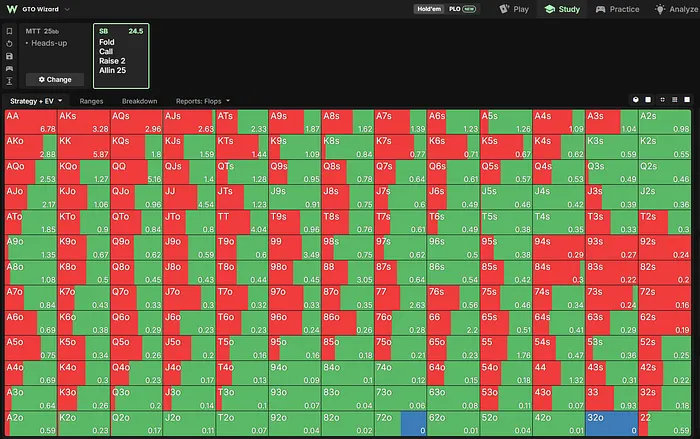
Here you can see that the SB does have some folds at the bottom of their range, with 32o specifically being a pure fold.
The larger 1bb ante creates much more dead money in the pot preflop, making it too profitable for the SB to simply surrender their positional advantage by folding. At 26bb deep, the SB can realize equity extremely well in position, so even the weakest hands perform better as limps or raises rather than open folds.
With only a 0.25bb ante, the pot is smaller preflop, so some of the lowest-EV hands are no longer profitable enough to continue, which is why open folding still occurs at a low frequency.
Dejan Kaladjurdjevic checked his 10♠9♣ in the BB. GTO Approved ✔️
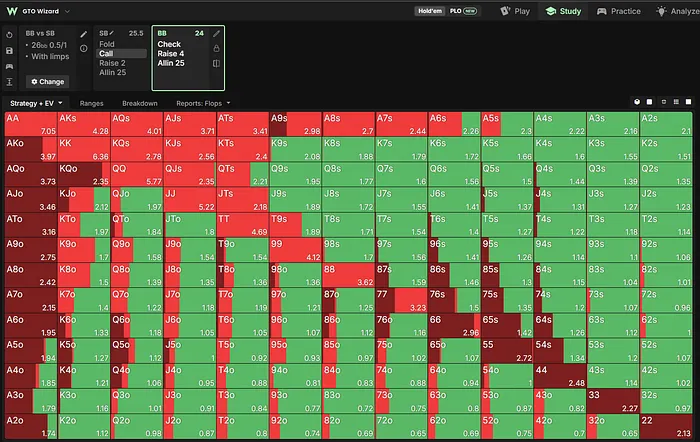
Recommended Strategy and EV for T9o:
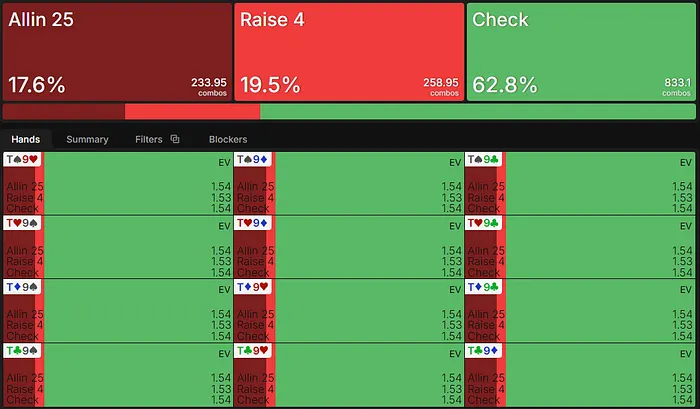
Due to the 1bb BB ante, you can see that the BB raises 37.2% of the time, using both 4bb and all-in raise sizes. T9o mostly prefers to check, but the solver does mix in some all-ins, as both options generate almost identical EV overall.
BB 25bb Range vs limp with 0.25bb ante:
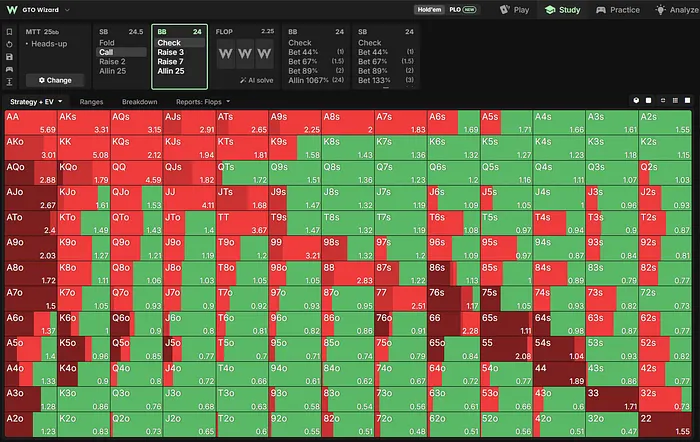

If you compare the two strategies, when the ante is only 0.25bb, the BB has less incentive to risk their entire stack preflop with all-ins. Instead, the solver uses smaller 3bb raises more often, allowing the BB to apply pressure while keeping more playability postflop.
With a 1bb ante, there is much more dead money in the pot, which increases the EV of jamming. Winning the pot preflop becomes significantly more valuable relative to the stack size, so the solver is more incentivized to use all-in raises.
Post-flop Analysis
Flop (900,000 Pot): 9♦5♠4♣
Kaladjurdjevic checked with 10♠9♣. GTO Approved ✔️
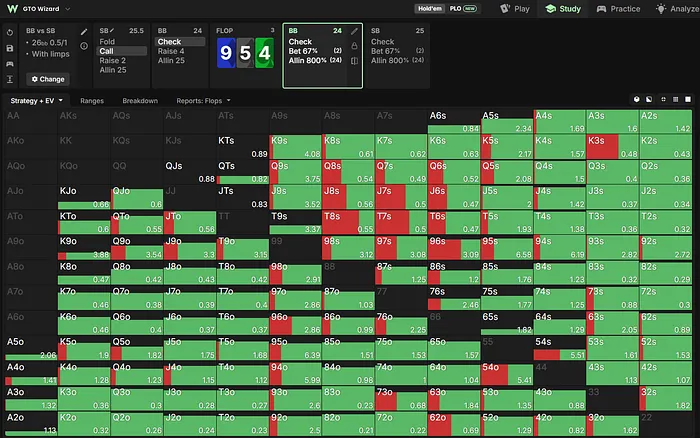
Recommended Strategy and EV for T9o:
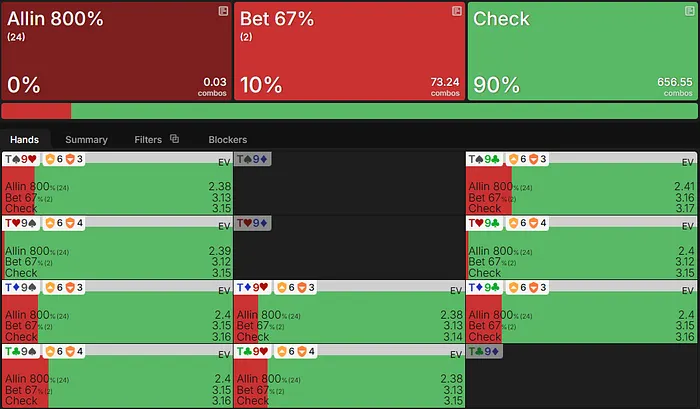
The solver recommends that the BB mostly uses a checking strategy on this flop, although it does still mix in donk bets around 10% of the time. With 10♠9♣ specifically, both checking and betting 67% pot generate almost the exact same EV, which is why the solver is indifferent between the two options.
Dvoress bets 900,000 with 3♥2♠. GTO Approved ✔️
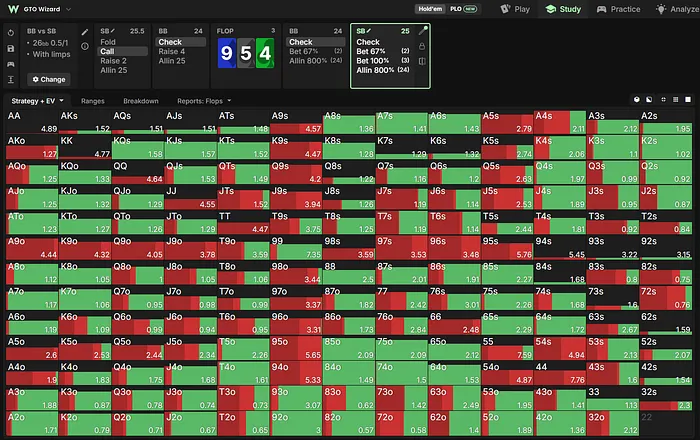
Recommended Strategy and EV for 32o:
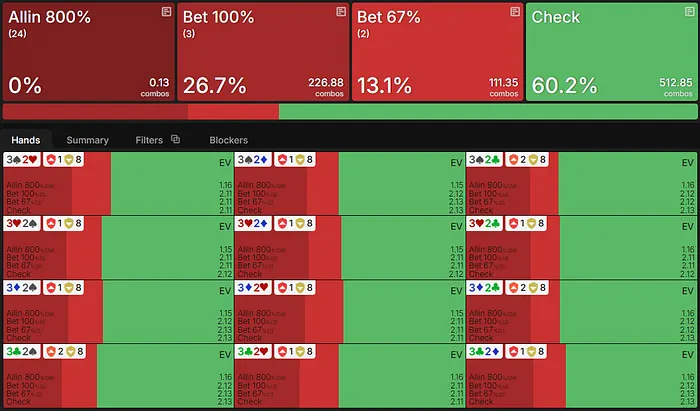
The 100% pot bet size that Dvoress used in-game is the size the solver prefers most often when betting.
As you can see above, the solver mixes between three actions with all 32o combos in this spot: checking, betting 67% pot, and betting 100% pot. All three options generate almost identical EV overall.
Kaladjurdjevic called the 900,000 bet. GTO Approved ✔️
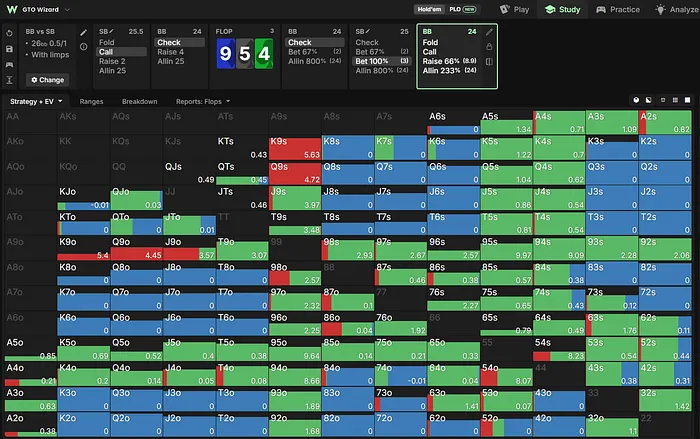
Recommended Strategy and EV for T9o:
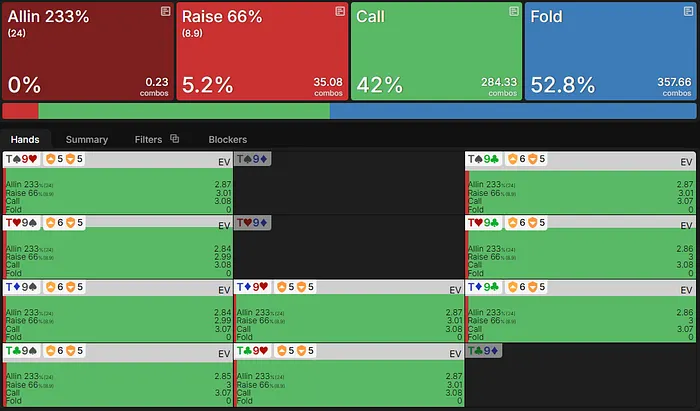
Vs this bet size, the solver mostly recommends calling as the main continue. Raises are only used around 5% of the time, while all T9o combos are pure calls against this flop bet.
Turn (2,700,000 Pot): A♥
Kaladjurdjevic checked with 10♠9♣. GTO Approved ✔️
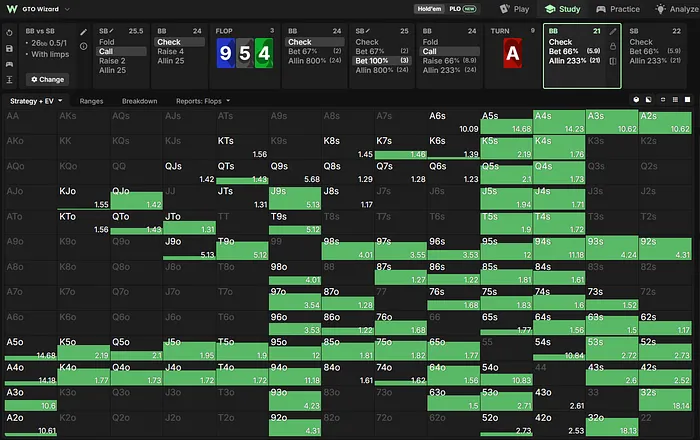
A pure range check is recommended on this turn card, as the SB still retains the overall EV advantage.
Dvoress bet 2,200,000 with 3♥2♠. GTO Approved ✔️
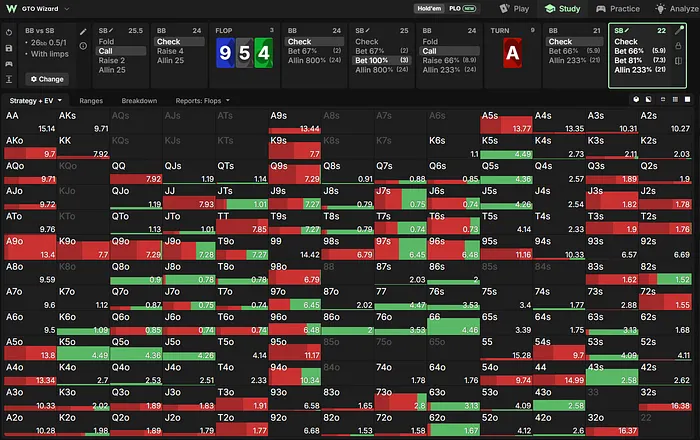
Recommended Strategy and EV for 32o:
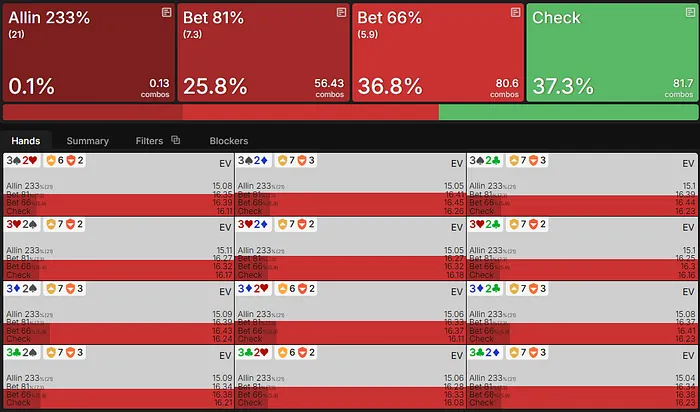
The solver prefers the 66% size overall, as this is the more geometric turn size when setting up a river all-in. However, as you can see, the 81% size Dvoress used in-game is also fine and does not lose much EV overall with 3♥2♠.
What is a geometric bet size?
A geometric bet size is one in which you bet a consistent percentage of the pot on each street, so that stacks effectively go all-in on the river. This approach is optimal when your range is perfectly polarized, as it maximizes minimum defense frequency (MDF) while ensuring that the full stacks are committed by the river.
BB vs SB Turn Range Comparison:
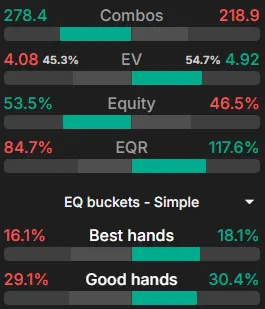
The SB can keep betting this turn card at a high rate because they still have more of the strongest hands in the range compared to the BB.
Kaladjurdjevic calls the 2,200,000 bet with 10♠9♣. GTO Approved ✔️
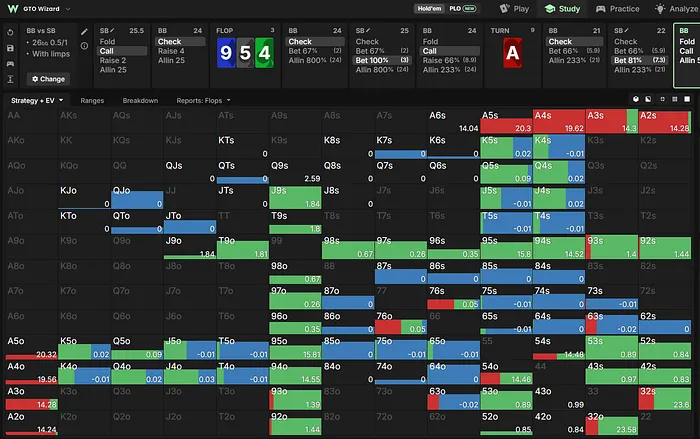
Recommended Strategy and EV for T9o:
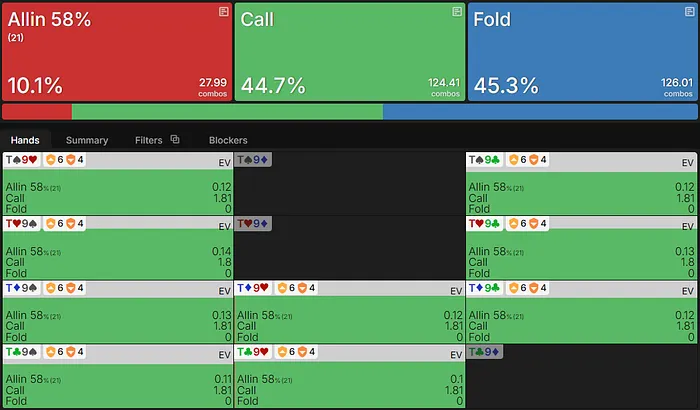
T9o is a pure call vs this turn bet size, with no 9x second-pair hands folding in this spot.
River (7,100,000 Pot): 9♥
Kaladjurdjevic donk-jammed for 4,600,000 total with 10♠9♣ GTO Approved ✔️
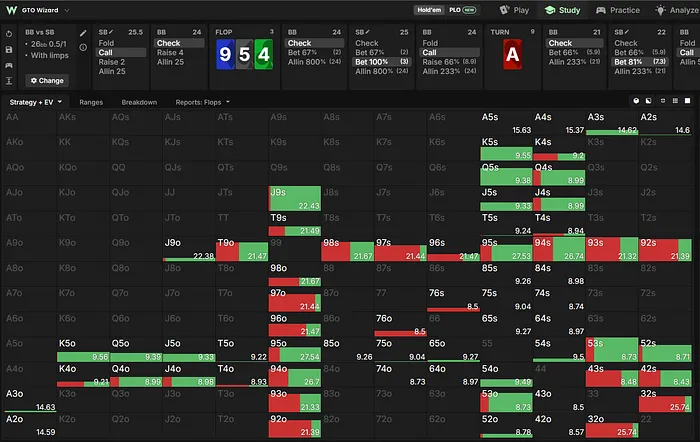
Recommended Strategy and EV for T9o:
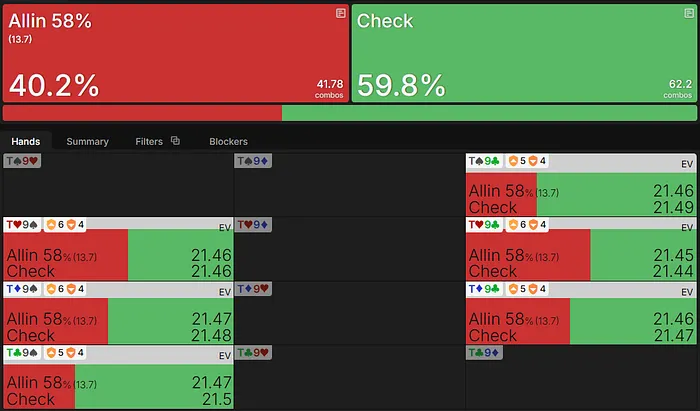
On this specific river card, the BB can now have some donk all-ins, with all T9o combos mixing between all-in and check. Let’s compare the ranges to see why.
BB vs SB River Range Comparison:
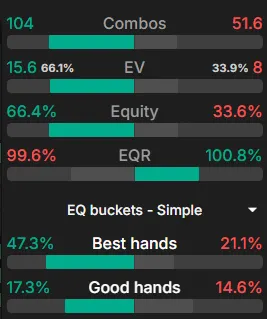
As you can see, everything apart from EQR (Equity Realization) now shifts in favor of the BB’s range.
This is because the SB rarely plays this line with 9x, so once the river pairs the 9, the BB now has a higher percentage of the best and good hands compared to the SB. This allows the BB to start using donk all-ins, both to extract value from worse hands and to fully realize equity while playing out of position.
The SB still has the higher EQR because they are in position, but that is also why the BB is incentivized to donk all-in rather than check and risk the hand checking back.
Dvoress snap-called with 3♥2♠. GTO Approved ✔️
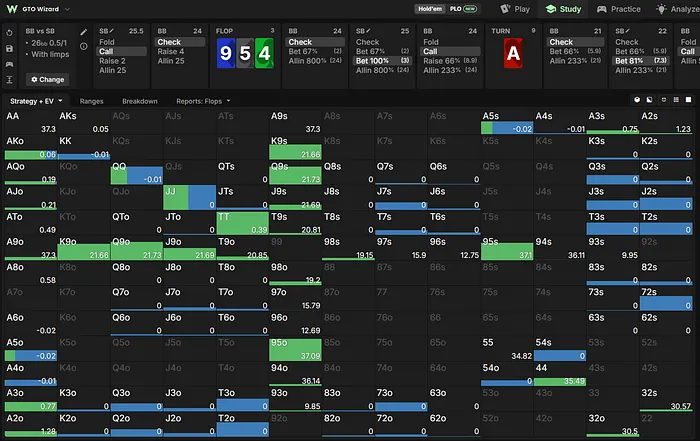
This is an easy call with a straight vs this all-in size.
Key Takeaways
- Due to the 1bb ante, the SB has zero open folds heads-up at 26bb deep
- With a 0.25bb ante, the BB prefers smaller raise sizes more often, while a 1bb ante increases the EV of all-in raises
- The 100% pot flop sizing used by Dvoress is solver-approved and preferred at high frequency
- The SB keeps a strong range advantage on the turn, allowing them to continue betting at a high frequency
- T9o remains a pure continue on the turn, with no 9x second-pair hands folding
- Once the river pairs the 9, the BB gains a range advantage and can start using donk all-ins
- The BB’s donk all-in is used to extract value and fully realize equity while out of position
- Dvoress’ straight is a clear call vs the river all-in
If you’d like to analyze your own heads-up hands and compare different ante structures using a solver, click the link below to start using GTO Wizard today.
To see the hand play out in real time, skip this video forward to 09:41:00.


Poker Pro & Sigma Poker Tour Ambassador