Warning: Undefined array key "post_type_share_twitter_account" in /var/www/vhosts/casinonewsblogger.com/public_html/wp-content/themes/cryptocurrency/vslmd/share/share.php on line 24
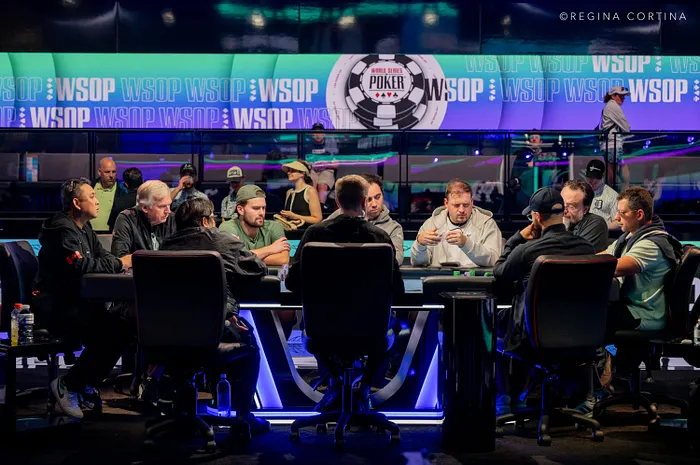
After a well-publicized tank of more than 15 minutes during the WSOP Main Event on Saturday (among other less egregious examples), the World Series of Poker responded on Day 7 by introducing a shot clock, sparking widespread debate.
The idea had been floated last year following the antics of Will Kassouf, Ike Haxton, and others. This time, however, the WSOP decided enough was enough. With just 62 players remaining in poker’s world championship, those returning for Day 7 were informed that a shot clock would be in effect.
The move has divided opinion, with Shaun Deeb, Chris Brewer, and plenty of others weighing in. But there is no solution that satisfies everyone, and striking the right balance is far from straightforward. So what options does the WSOP actually have?
Ditch the Clock
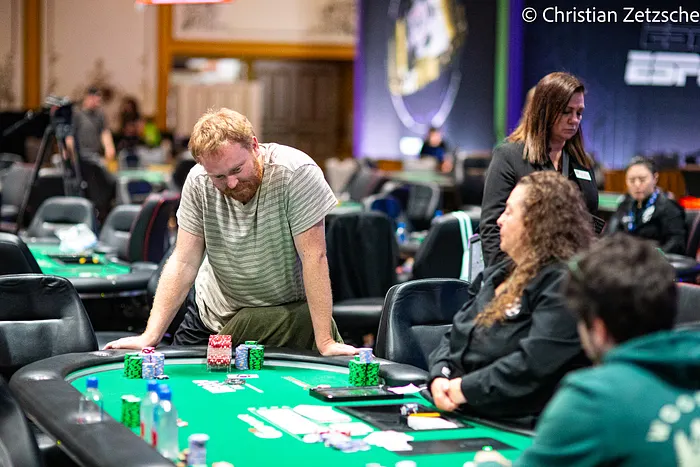
The simplest solution would be to revert to the system that served the first six days of this year’s WSOP Main Event, and every Main Event before it.
Of course, that leaves open the possibility of another 15-minute tank like the one seen on Saturday, but there are already mechanisms in place to deal with excessive delays. The floor eventually stepped in to intervene, and Loren Klein, who was involved in the incident, ultimately missed the pay jump he had been stalling to reach.
Whether ESPN viewers, particularly those newer to poker, want to sit through another tank of that length is another question. It can make for slow viewing, but there is also no denying the drama that comes from watching a player agonize over a decision worth millions of dollars, or some of the iconic table talk that poker would miss if players were on the clock.
The Current System Brought in on Day 7
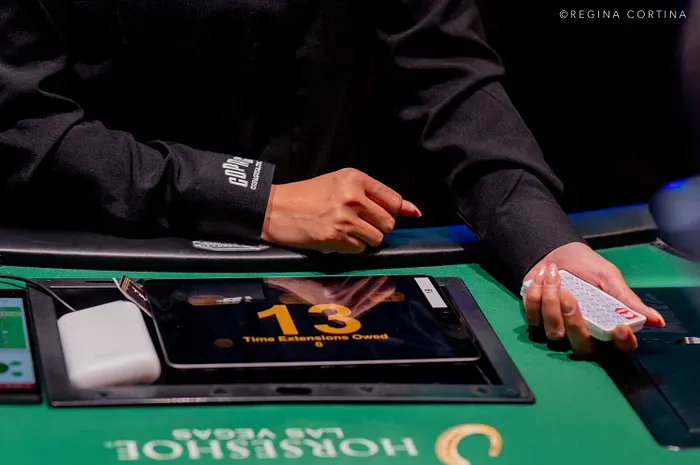
As announced by Joe Stapleton on the WSOP livestream, the newly introduced system gives players 20 seconds to act preflop and 30 seconds on each postflop street, along with six 30-second time bank cards to use each day.
While there is no doubt the system addresses the problem highlighted by Day 6’s excessive tanking, many players, including high-stakes pro Chris Brewer, have argued it gives an “unbelievable amount of EV” to players already familiar with shot clock formats.
The WSOP Main Event owes much of its appeal to the thousands of recreational players who save up and travel to Las Vegas each year for a shot at poker immortality. While those players face the same time constraints as everyone else, it is worth considering whether a format more commonly seen in high rollers disproportionately benefits seasoned pros.
Not all top players agree with Brewer, however. Speaking to PokerGO after the first level of Day 7, Shaun Deeb admitted the shot clock was likely more beneficial to him as someone familiar with the format, but argued it was a “necessary evil” to prevent the unfairness that comes from excessive tanking elsewhere in the tournament.
“The pros take way more time than recreationals. Very few recreationals tank. If anything, this is better for the recreationals because the pros can’t sit there for seven minutes every turn and figure it out,” Deeb said.
Dealer Discretion
One possible approach would be to leave the current system in place but give dealers more discretion to step in when a hand begins to drag on.
This would avoid imposing a blanket shot clock on the entire field while still giving the floor and dealers the ability to act when a player is taking an excessive amount of time. After all, the issue that sparked the debate was not players taking a reasonable amount of time over difficult decisions, but a situation where a single decision, with a single chip behind, brought play to a standstill.
The challenge is consistency. What one dealer considers excessive may not be the same as another, and asking dealers to make those judgment calls in the biggest tournament in poker could easily be considered unfair.
However, it does offer a more flexible approach that would preserve the drama that comes with major Main Event decisions while giving officials a tool to prevent extreme examples from becoming a distraction.
More Self-Policing by Players
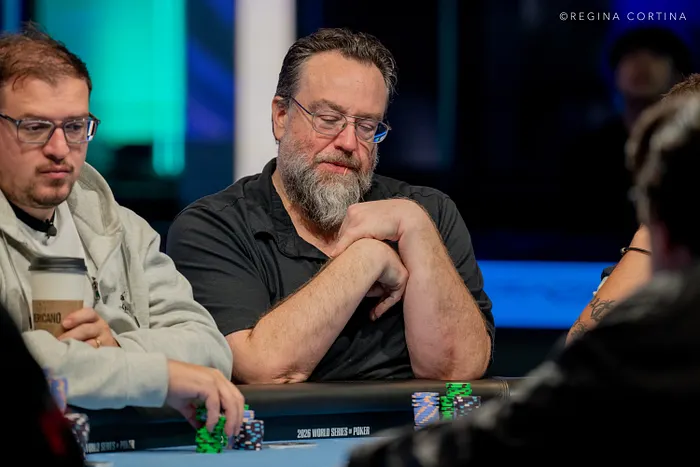
Another possible solution would be encouraging players to do more self-policing at the table.
Players already have the ability to call the clock, but the problem is that in many cases they’re incentivized to not do so. During the Day 6 incident, the players at the table were also set to benefit from the upcoming pay jump, meaning they had little reason to rush the decision. The delay, however, impacted everyone else still playing in the tournament.
There is also a stigma attached to calling the clock, with many players viewing it as bad etiquette unless absolutely necessary. Speaking to PokerNews after bagging on Day 6, Todd Brunson admitted he had rarely, if ever, considered doing so, but said referring to the 15-minute tank elsewhere in the event “I don’t think I’ve ever called the clock before, but I might have on that one.”
Moreover, the 2025 Main Event showed that players do not need to be directly involved in a hand, or even sitting at the same table, to help enforce the rules. A player elsewhere in the room called the clock on Ike Haxton, a move that is available to any player in the tournament.
A Chess-Style Clock
A more radical approach would be adopting a chess-style clock, an idea already being tested in high-level poker at the Triton Poker Series.
Rather than giving players a fixed amount of time on every decision, a chess-style clock gives each player their own time bank for the entire tournament day. That means players can use that time however they choose, saving up for time for major decisions while making quicker choices in routine spots.
The concept has already received praise from some of poker’s biggest names, with Daniel Negreanu describing the system as an “innovative game changer for poker” and Phil Hellmuth saying that while he generally plays quickly, there are situations where players need extra time to fully evaluate a decision.
The appeal of the system is that it removes the need to police individual tanks. Players are free to take their time when it matters, but repeated delays come at a cost as they eat into their own clock rather than impacting everyone else in the tournament. Again, though, it’s a system that’s currently more familiar to the elite pros.
Shot Clocks as the Tournament Gets Deeper
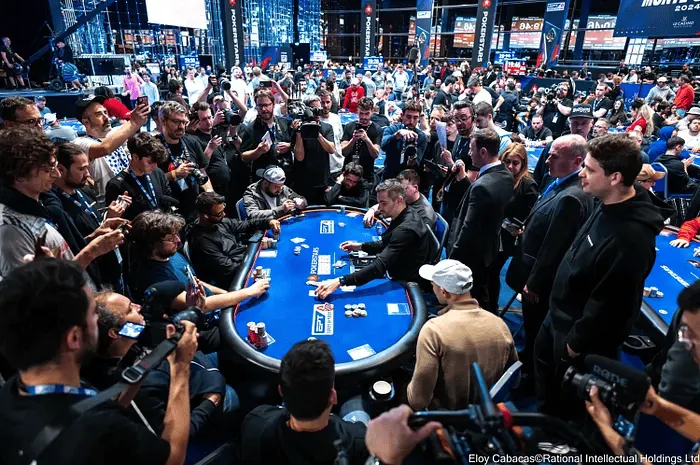
Alternatively, the WSOP could look towards the European Poker Tour (EPT) Main Event model, which combines a traditional shot clock with penalties for players who deliberately slow down play.
Under the EPT system, the shot clock is not introduced until Level 11. Players receive a limited number of time bank cards, with additional cards awarded throughout the tournament. They have 15 seconds to act on their first decision, less than the WSOP’s current allowance, and 30 seconds on subsequent decisions.
This approach would avoid placing recreational players under a shot clock during the early stages of the Main Event, while still addressing the issue once the tournament reaches the deeper stages where delays become more common and the stakes are higher. Players who intentionally abuse their time or deliberately stall can also be penalized by being placed on a five-second shot clock for future decisions.
No Easy Solution
Those are just a handful of the options available to the WSOP, and none come without drawbacks. Every approach risks frustrating a different group of players, while some may argue the issue was never significant enough to require a change in the first place.
Regardless of where people stand, the introduction of the shot clock has become one of the biggest talking points of Day 7 at this year’s WSOP Main Event, and the debate is unlikely to fade as the tournament moves closer to its mega-money decisions.


Editor, Poker & Casino