Warning: Undefined array key "post_type_share_twitter_account" in /var/www/vhosts/casinonewsblogger.com/public_html/wp-content/themes/cryptocurrency/vslmd/share/share.php on line 24
Video assistant referee causes controversy every week whether it be the Premier League, Champions League or FA Cup, but how are decisions made and are they correct?
This season, we take a look at the major incidents to examine and explain the process both in terms of VAR protocol and the Laws of the Game.
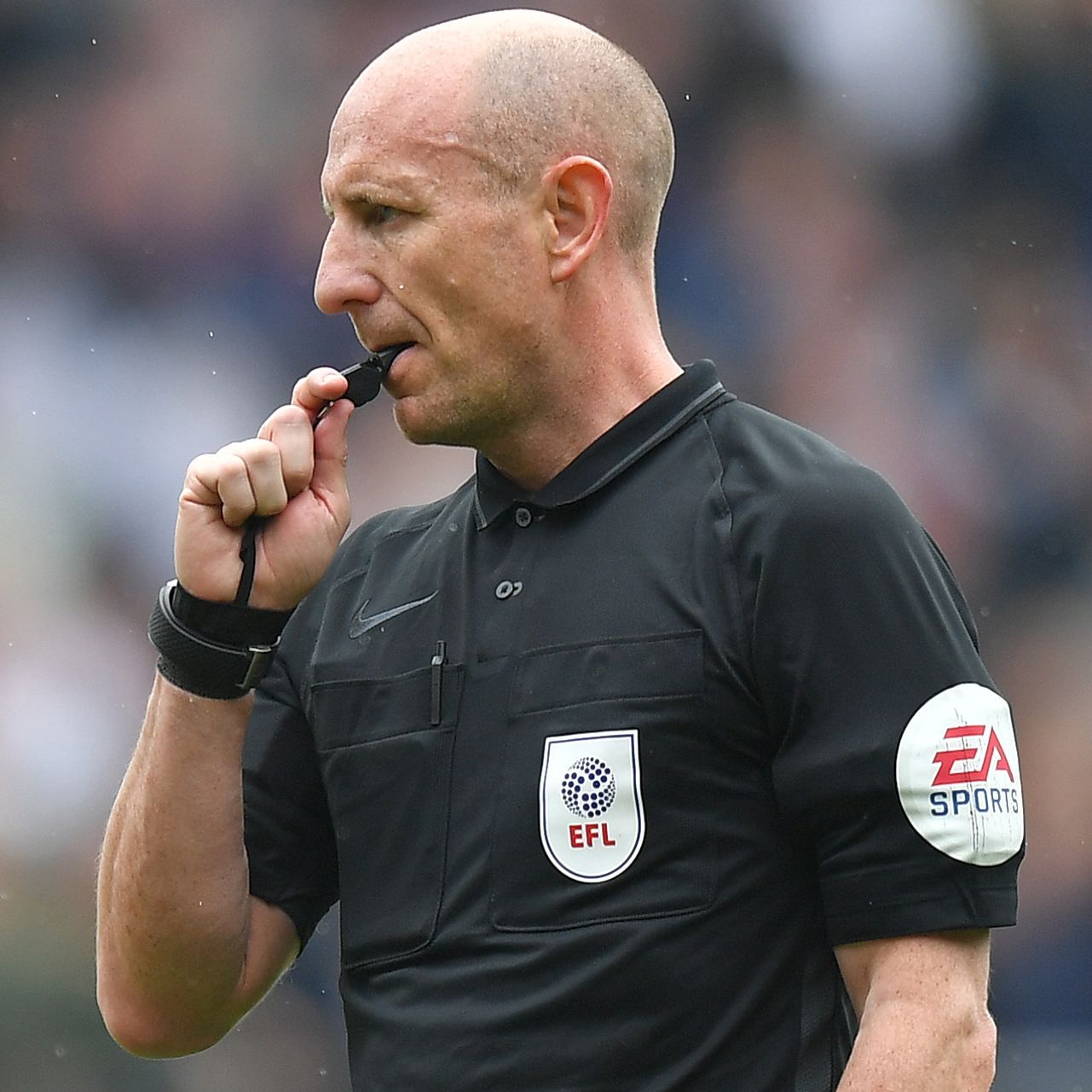 Andy Davies (@andydaviesref) is a former Select Group referee, with over 12 seasons on the elite list, working across the Premier League and Championship. With extensive experience at the elite level, he has operated within the VAR space in the Premier League and offers a unique insight into the processes, rationale and protocols that are delivered on a Premier League matchday.


Referee: Paul Tierney
VAR: John Brooks
Incident: Lisandro Martinez red card
What happened: What initially appeared to be an innocuous aerial challenge involving Manchester United defender Martinez and Leeds United striker Dominic Calvert-Lewin, a VAR review resulted in the defender being sent off for pulling Calvert-Lewin’s hair.
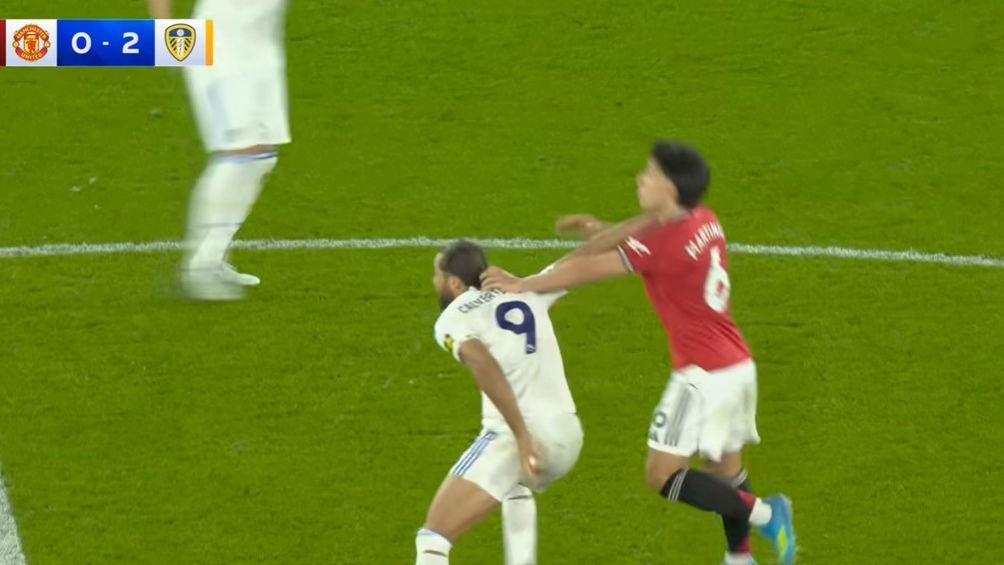
Credit: Sky Sports
Why was this a Red Card: Following a new directive this season, the referees have been asked to apply a strict threshold whenever hair pulling occurs. This action is deemed as non-football action and not acceptable within a typical challenge. The action must be deemed as violent conduct and sanctioned with a red card.
A precedent was set in the Premier League when Everton defender Michael Keane was punished for a similar foul on Wolves striker Tolu Arokodare back in January. Keane similarly pulled the forward’s hair during an aerial challenge.
However, in the Women’s Champions League, Arsenal‘s Katie McCabe was not punished when she clearly pulled the hair of Chelsea player Alyssa Thompson. Neither the on-field referee team nor the VAR identified this incident as a red card offence and the Arsenal player went unpunished.
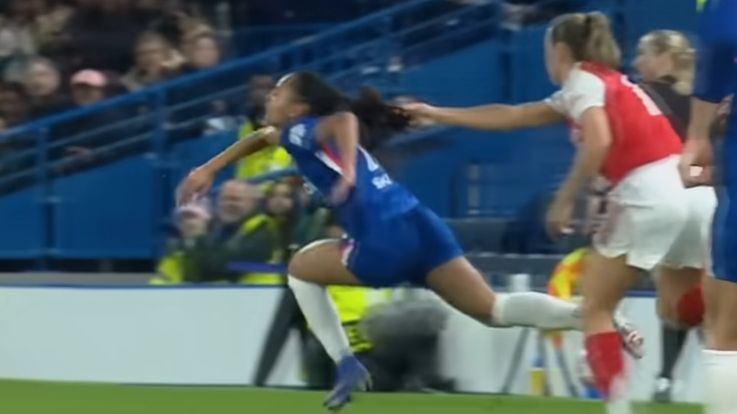
Credit: ESPN
Verdict: Given the current guidance from PGMO and the Premier League, the decision to send off Martinez was the correct one, though United will feel it was harsh. Equally, the length of time that Tierney spent at the screen would suggest he too was slightly uncomfortable with the ultimate decision to brandish a red card. The level of contact was negligible, but the recent directive does not make such a consideration.
An increase in these types of incidents in recent seasons led the authorities to send a strong message that this type of act would be dealt with zero tolerance, non-negotiable. Whilst this stance is unlikely to change for the remainder of the season, I would anticipate some discussions over the summer on this topic and whether authorities should continue with a zero-tolerance policy.
The Women’s Champions League incident, however, was a clear error and the action met all the criteria for violent conduct on its own, irrespective of any new directive advised to the match officials.
The action by McCabe was deliberate with force and, in my opinion, should have been identified by the on-field referee and her fourh official. However, the non-intervention by VAR was particularly disappointing and difficult to understand. It was a clear red card offence, and the Arsenal player should have been sent off.