Warning: Undefined array key "post_type_share_twitter_account" in /var/www/vhosts/casinonewsblogger.com/public_html/wp-content/themes/cryptocurrency/vslmd/share/share.php on line 24

I think it’s fair to say that Nigel Farage is not overly popular with the denizens of PB. He also looks well set to become Prime Minister with Reform currently odds on to win most seats at the next election.
What can stop the Farage juggernaut? I would argue 5 potential things:
- Labour’s popularity recovers, and they are re-elected
- The Conservatives popularity recovers, and they re-establish themselves as the main right-wing party
- Another party, e.g. Lib Dems or Greens, has an electoral breakthrough
- Reform shoot themselves in the foot with extreme policies, dodgy candidates or internal disagreements.
- Tactical voting.
This article will focus on tactical voting
My golden rule
I would humbly suggest the following rule of tactical voting:
Some left-wing voters will vote tactically for another left-wing party to keep out the right, provided that the recipient party is not in Government.
The last point is key. If you ask voters to vote for a party they like or can tolerate to keep out a party they dislike, then you have a good chance of success. If you ask voters to vote for a party they dislike to keep out a party they dislike even more, then that is a lot harder.
Let’s look at some examples:
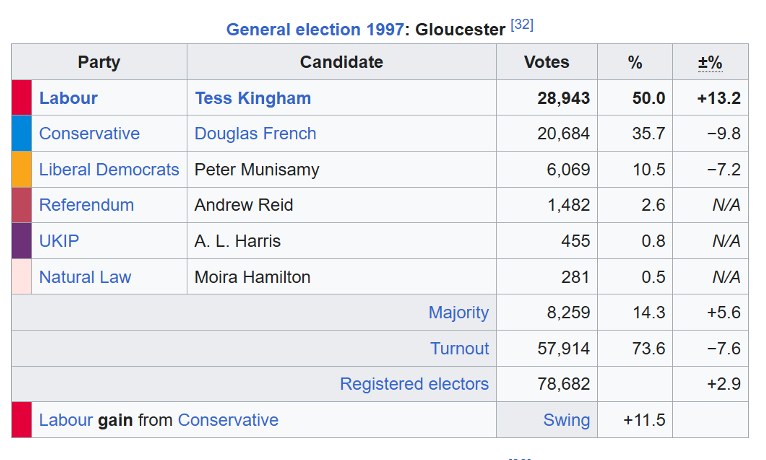
Gloucester is a typical Con/Lab marginal, and we can see that the LD vote dropped by 7 percentage points in 1997.
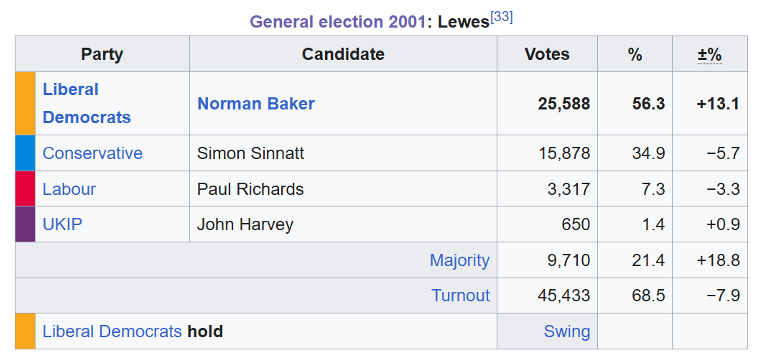
Lewes is a seat the LDs narrowly gained in 1997. The biggest tactical swing from Labour happened in 2001 (this was common in a lot of LD seats).
Let’s fast forward and see what happened next:
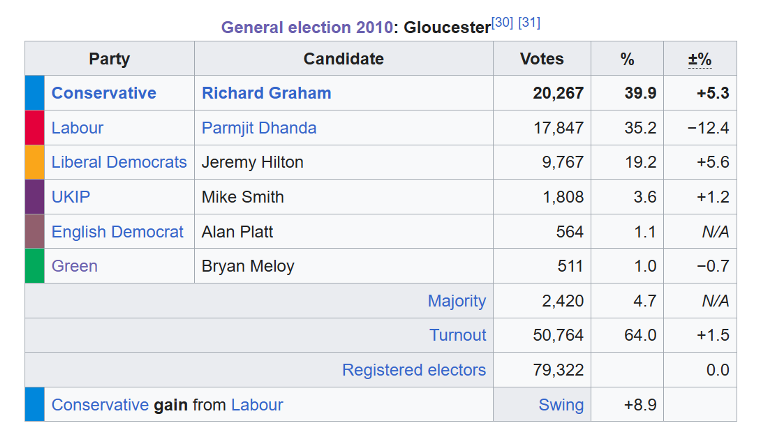
In Gloucester, the LD vote started increasing again from 2001. In 2010, the LDs gained nearly 6 percentage points, which contributed to a narrow Conservative win.
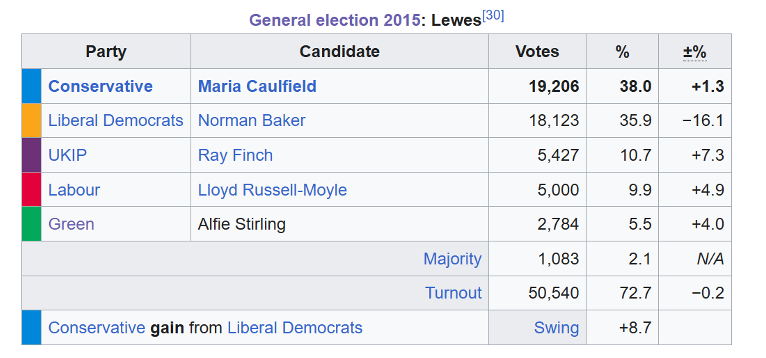
In Lewes, the LDs had a massive loss of vote share in 2015. They could nevertheless have hung on if it wasn’t for the 5 percentage points Labour gained.
Implications for next time
So what are the implications? Let’s look at 2 seats where tactical voting could make a difference:
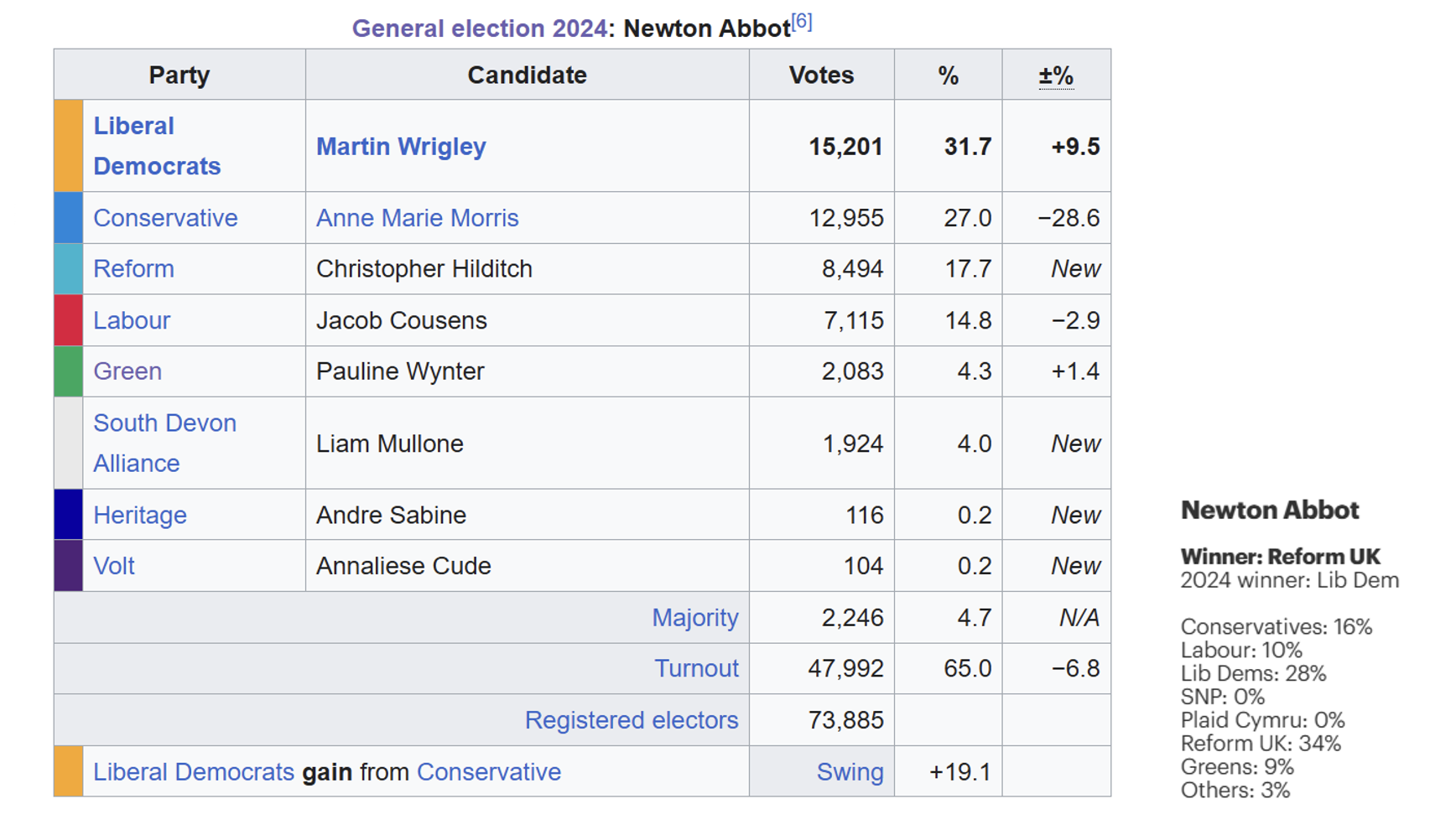
Newton Abbot – 2024 result and September 2025 YouGov MRP
The LDs held Newton Abbot’s predecessor seat of Teignbridge from 2001-2010, and this is a seat where they won due to historical strength, rather than blue wall demographics.
This is the type of seat where tactical voting will be critical and the LDs will need to ruthlessly squeeze Labour and the Greens. As they are in opposition, I would back them here.
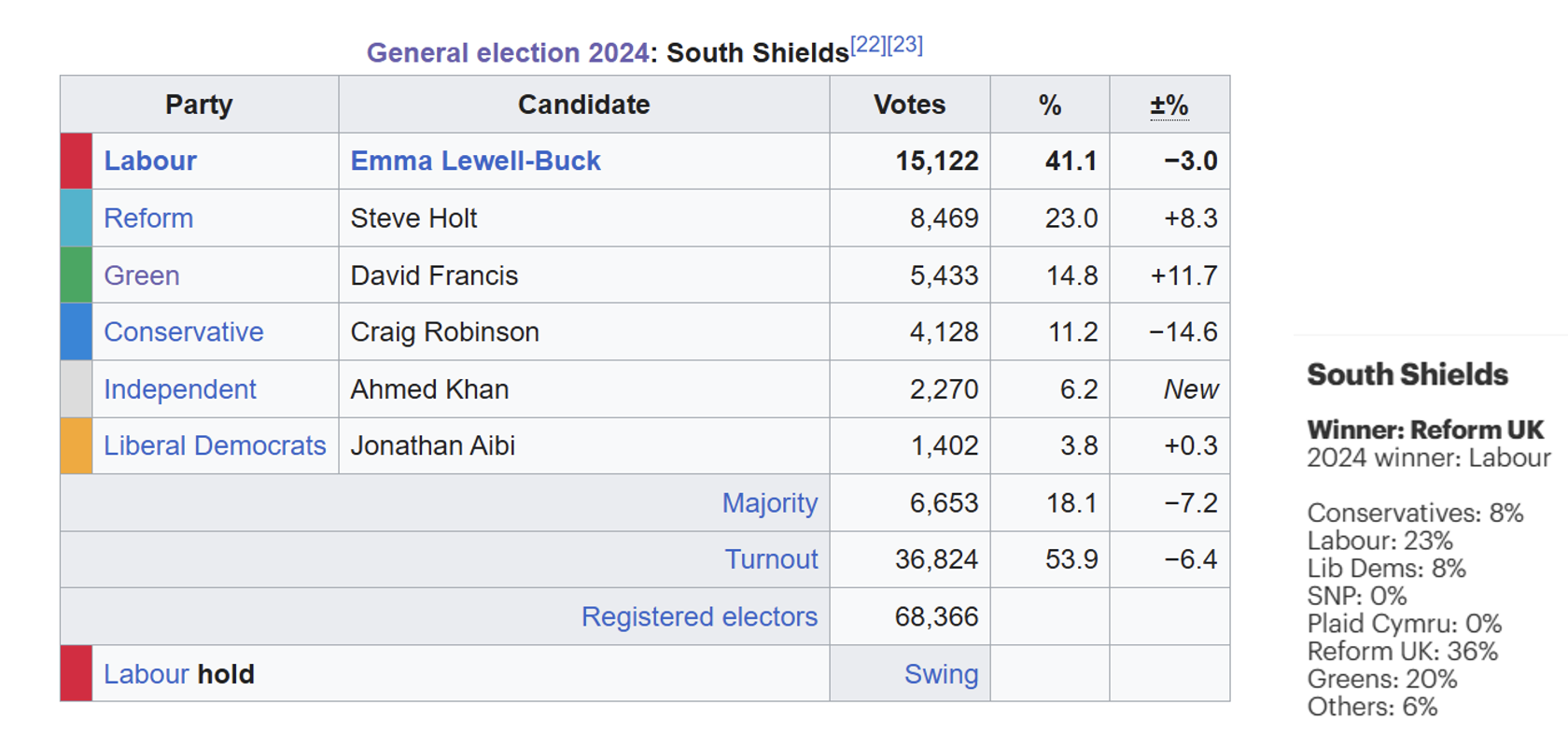
South Shields – 2024 result and September 2025 YouGov MRP
Labour have held South Shields since 1935. The pattern from the YouGov MRP is one where Labour’s vote share has dropped dramatically. Some has gone directly to Reform, while some has also bled to the LDs and Greens.
Clearly, a combined left vote could win the seat. However, why that should be Labour? The Greens are only 3 percentage points behind in the MRP (and this is the Green’s 13th target seat on UNS).
A progressive alliance?
A progressive alliance of the left-wing parties against the Conservatives and/or Reform is often touted.
However, this works best when the right are in power as then all the left-wing parties can make gains. With Labour in power, they would be the disproportionate beneficiaries of an alliance as they won 411 seats at the 2024 General Election.
A progressive alliance would not now be in the interests of the Greens or Your Party who need to be feasting on Labour seats while the Government is unpopular. It is better for the Greens to go all out to maximise their seats and vote share, even if it means Reform winning in the short term.
What about the Conservatives?
One of the most surprising findings from the YouGov research that TSE published on Thursday is that 34% of Labour voters and 19% of Green voters said they would vote Conservative to stop Reform.
I’m not sure I believe this.
The question was abstract when the next General Election is still a long way away. However, when these voters actually come to cast their ballots, it will be at the end of a 4-6 week campaign, where the Conservatives will probably be putting forward policies that these voters don’t like e.g. cuts to public services, leaving the ECHR. When push comes to shove, will Labour voters really vote for the old enemy?
Is the tactical choice clear?
One of the underlying principles behind tactical voting is that it is always possible to identify the best possible candidate to vote tactically for. In the 90s and 00s heyday of tactical voting, this was generally the case as the left vote was only split between Labour and the LDs, who were strong in different areas.
With 5 parties now polling in double digits, there are many seats where it is difficult to identify a clear challenger to Reform.
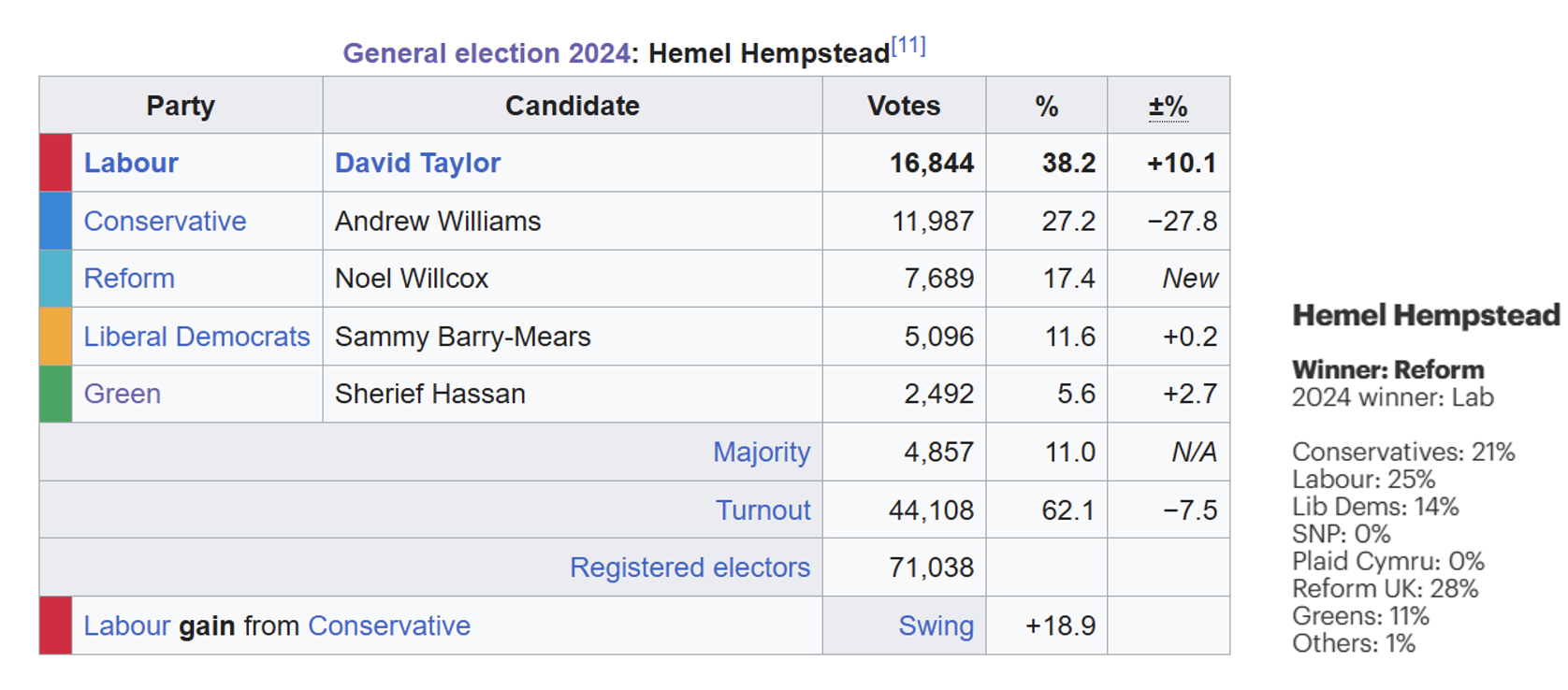
Hemel Hempstead – 2024 result and September 2025 YouGov MRP
For example, in Hemel Hempstead, the YouGov MRP had Reform ahead but with only 28% of the vote. That should be easily surmountable with a single clear challenger.
Labour were second in the MRP and would no doubt say that their MP is working hard for the area. The Conservatives would probably respond that they have historically held Hemel Hempstead, except in very bad years. The LDs might in turn say that they are currently running Dacorum Borough council and aren’t saddled with the weight of unpopularity that the big 2 have. Even the Greens might fancy their chances on current polls.
For tactical voting to be successful, it relies on the donor party getting out of the way and turning a blind eye to their voters being pilfered. Why should anyone get out of the way in seats like this?
The other issue is that with the parties so close together and with the electorate so volatile, tactical voting can be vulnerable to late swings, e.g. 1,000 LDs tactically vote for Labour, but then 1,000 existing Labour voters switch to the Greens.
The only way for this to really work is for the parties to do official deals, e.g. LDs back Labour in Hemel Hempstead in exchange for Labour backing LDs in Watford:
This would be hard for Labour, as it means throwing sitting MPs under the bus and upsetting local parties.
What about right wing tactical voting?
To date, tactical voting has mainly been the preserve of the left. This reflects that in the 90s and 00s there was one main right-wing party vs. two on the left.
With two parties on the right now, it makes sense that at some point right-wing tactical voting may develop.
In Labour’s upcoming budget, they look set to hammer groups such as the self-employed, pensioners and landlords. This may seem relatively cost free as these groups tend not to vote Labour.
However, I wonder if Labour make these groups angry enough whether that that could be a catalyst for anti-Labour tactical voting to develop.
The other interesting scenario, which YouGov didn’t poll, is what happens if the Greens continue to move forward and the choice in some seats becomes Reform or the Greens.
Conclusion
Tactical voting is a comfort blanket for Labour supporters, in that however unpopular they are, Green and LD voters will flock back to them to stop Reform. For me, the Caerphilly by-election shows that tactical voting is alive and well, but that it will be more effective if a non-Labour left-wing party is challenging Reform.
My view is that tactical voting may help at the margins, but it won’t be the main catalyst that stops Reform.
If Farage is NOT to become PM, it is likely to require Reform self-combusting, as well as one of the other parties putting forward a positive platform for the future that is well received by the voters.
Gareth of the Vale